Pest Control Legends / Episode 33
Ryan Tate on the builder relationships behind 95% of Rogue Pest Solutions' growth

Written by Dan Leibrandt, host of Pest Control Legends and founder of Pest Control SEO
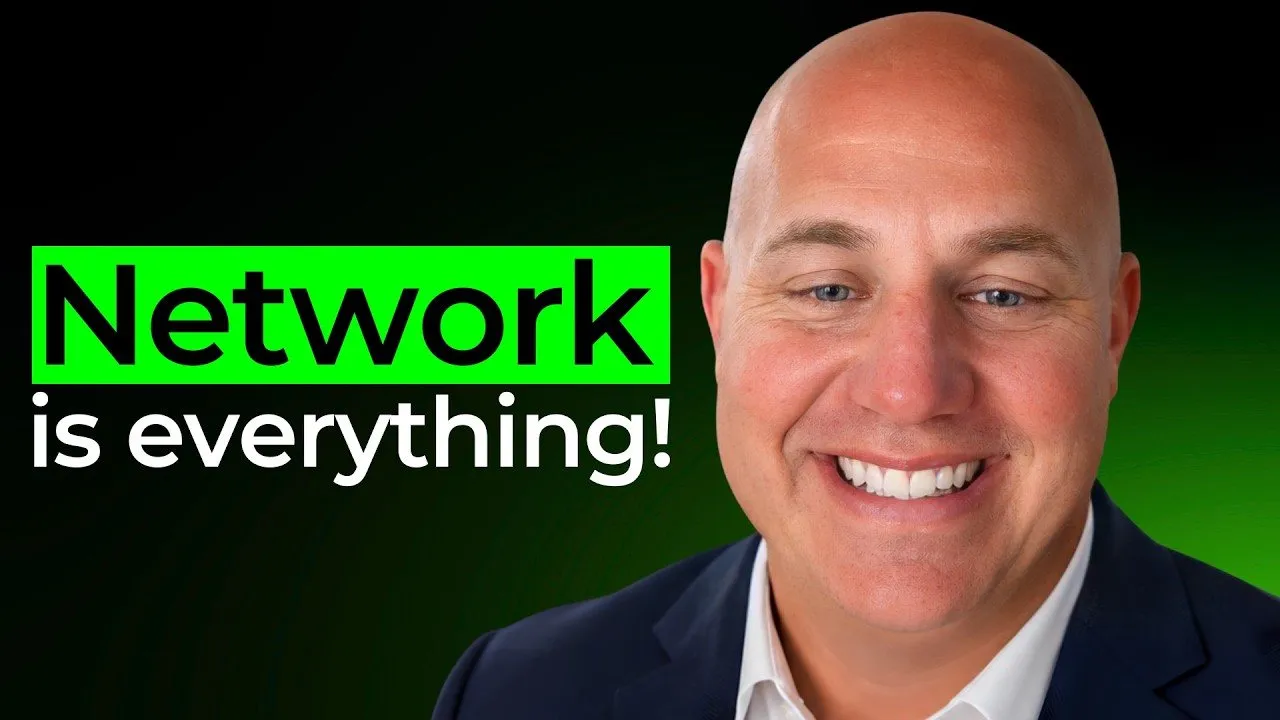
Ryan Tate thinks people buy pest control for 2 reasons. They see bugs, or they move. Nearly everybody’s marketing goes after the first group, my SEO work included. Rogue Pest Solutions, the Alabama-based company Ryan runs with 4 partners, goes after the second, and 95% of its growth has come through relationships with home builders.
When Ryan joined Rogue in mid-2023, it had 13 or 14 employees and $1.4M to $1.6M in revenue. When we recorded, it had 34.
He’d mentioned the builders on Jonas Olson’s podcast, and I still didn’t quite get how it worked, so I had him walk me through it.
Who is Ryan Tate?
Ryan Tate is a partner in Rogue Pest Solutions and the managing partner of its Huntsville market. He stumbled into the industry about 20 years ago, when his wife was finishing a master’s degree and a friend said he could make a little money in pest control. He figured he’d stay 6 or 8 months, then fell in love with the people and the freedom.
He started as a technician at Kirkland’s Pest Control, a family-owned company in Middle Tennessee and North Alabama, and over 7 or 8 years moved into sales, sales management and branch management. When the culture stopped fitting, Shawn Hollis, now president of Waynes, recruited him. He stayed a bit longer at Waynes, which Anticimex bought in 2019.
Two Waynes colleagues, Scott (Ryan’s old boss) and Jamie, left in 2017 to start Rogue. They’d watched Waynes grow from a couple million dollars to $28M and planned a modest business servicing apartments. After Robert left Waynes in 2019 to open a northeast Alabama market for Rogue, builders started calling about termite pre-treats. Ryan came on in mid-2023 to launch Huntsville, and William to launch Cullman.
What Waynes got right
Ryan’s first company was mostly bug men and salespeople, while Steven Splawn and Eric Frye, who owned Waynes before the sale, wanted a great culture and a sustainable financial model built on recurring revenue, several marketing channels and real profit. Steven had been a CPA, so everybody lived in the P&L. Eric is still Ryan’s friend and mentor.
When Anticimex released its first rankings after the deal, Waynes had 6 of the top 10 branches worldwide. Ryan knew they’d built something special, just not how special. Thinking about why, he landed on culture, strategy and execution.
Culture is inspiring belief in something bigger than yourself, and you can tell whether you have it by how you feel on Sunday night before work. Strategy means requiring higher thinking from yourself and your people, so “we’ve always done it this way” isn’t an answer. Execution is expecting world-class results.
For Ryan, inspiring starts with his faith. He’s a follower of Jesus Christ and sees everything he has as a stewardship, something to grow for the next generation, like the servants in the parable of the talents. That includes his business.
“It’s a wealth building tool, but more important than that, it’s an impact building tool, and I want to have impact on people.”
He sees requiring as the lowest level of leadership. If someone can’t be inspired by what you’re doing, they probably aren’t a fit.
I’m a Christ follower too, and I admitted on the show that I used to be obsessed with money and kept burning out. Ryan’s answer was that if it’s not eternal, it won’t last.
He thinks strategy is the industry’s biggest gap. Plenty of companies have good-hearted people and great bug killers, but fewer step back and make decisions that win for the company, the customer and the employee. For a small shop, that starts with getting out of the truck. He keeps “Every yes is a no somewhere else” on the whiteboard in his basement. He credited Pest Control Millionaires with some of the industry’s progress on strategy.
People buy when they see bugs or when they move
Ryan is a principles-over-practices guy, so he started with why people buy.
“I think there’s two reasons they buy our services, pretty much. They see bugs and have a bug problem, or they move.”
The customer with bugs needs curative work and is harder to take care of. A mover usually needs prevention, which Ryan says is far more profitable, more scalable and easier to do. And one of the main reasons people move is that they bought a new home.
So Rogue works with regional, national and local builders. It installs Sentricon for the homeowner, builds a relationship with them, gets them to renew the termite service and cross-sells pest and mosquito control.
Ryan put it in blue ocean terms. (I read Blue Ocean Strategy a few years ago and it blew my mind.) In the red ocean, sharks fight over the same chum. Swim a little way off and there’s not much competition. Getting there takes buttoned-up operations, enough cash to treat relationships as a loss leader and years of work. If you can’t capitalize on the back end, the math doesn’t work.
Door-to-door reps knock the same new neighborhoods for the same homeowners, but Rogue already has their phone numbers and a current termite contract, which makes its cross-sale easier.
Inside a builder partnership
Most states require some kind of termite pre-treat on new homes, whether that’s borate on the studs, a liquid treatment under the slab or Sentricon at the end of the build. Most also want a 1 to 5 year warranty. What you’re after is the recurring revenue that follows.
Rogue has several builders doing anywhere from 150 to 2,000 homes a year, and homeowners come in as referrals, not cold calls. In Ryan’s rough example, if Rogue sells $250,000 of new business in a month, $200,000 to $225,000 comes through builders and the rest probably through realtors.
Ryan says you don’t have a lead until you have the NAP information. In SEO, NAP is your business’s name, address and phone number. For Ryan, it’s the homeowner’s. You have to earn their trust, steward the contact info and never abuse it.
Rogue owns the whole process, through installation, the closing paperwork the builder needs to close on time, and a first year of follow-up so the homeowner understands the warranty and the offer that comes after.
The model is cash and labor intensive at both ends, so it has to be your main focus and a real partnership. If a builder just wants a vendor, Rogue probably can’t work with them.
Take big relationships slowly
When I asked how he meets builders, Ryan said it works like recruiting or landing commercial accounts. Learn their process and what matters to them, then spend time where they are.
The bigger the relationship, the slower he goes. At the door he goes for the close hard, since there’s not much to lose. With a builder he takes his time, and if the answer is no, he asks to be their first call if they’re ever unhappy with their choice. He thinks in decades.
Build trust for its own sake, he said, not for a sale. A lot of sales training stops at making customers feel like you care, when the goal is to actually care, and people can tell. Once the door cracks open, though, you go for the jugular. My partner Jake Sheldon covers the lawn care and moving company version in his guide to strategic partnerships for pest control.
You need a cannonball
Ryan spent 8 months consulting while he sat out his non-compete, mostly for pest control companies. The biggest issue he saw, and still sees at PestWorld, is owners waiting to be rescued, when “nobody’s coming to save us as entrepreneurs.” A lot of companies stuck between $1M and $3M wanted to hire him or have him do the work. A consultant helps you figure out what to do, and then you have to do it. I’ve seen the same thing in my SEO consulting.
He thinks about lead flow in bullets and cannonballs. A bullet gets one customer at a time, like an owner who’s great at shaking hands and kissing babies. Training 5 people to do that is a cannonball. Between $1M and $3M, cancels get too big for bullets to keep up with. Builders, realtors, door-to-door and SEO can all scale, and he says every one of them costs a lot of money.
“There are pieces to the puzzle, but the piece is not the puzzle, right? So, like, referrals is a piece to the puzzle. Google reviews are a piece to the puzzle.”
Sponsorships and community events are pieces too. Either combine enough of them or find one big lead source with enough volume to chase. On the show, Jonas Olson mapped out the 4 revenue levels where owners plateau.
Leads aren’t always the problem. At about $28M, all organic, Waynes bought a $7M company that had more leads than Waynes and a retention problem.
Know a partner as long as you plan to stay partners
Ryan believes in going alone if you want to go fast and together if you want to go far. He’d been in the trenches with his partners for years and knew how good they were at their jobs and who they were as husbands and fathers.
One past partner didn’t work out. Ryan’s lesson was to have an operating agreement that spells out what each partner does every day, not just the equity. A $500,000 business with one tech can pay its owner $300,000 a year, he said, but with 4 other partners, only one person can eat off that, so everybody has to pull their weight.
“If I’m wanting a 10-year partnership, I want somebody that I’ve known for 10 years.”
Each partner runs his own market, P&L included, plus one company-wide role. William leads sales, and Ryan leads the admin team and leadership development. Scott helps manage cash flow, which matters given how much Rogue spends up front on growth. Jamie makes sure frontline employees are trained and equipped, and Robert is great with builder relationships.
They can also say hard things to each other. If you have to mince words with a partner, Ryan said, it’s not going to work.
My take
Nobody had laid out the builder model for me before Ryan did. I’ve heard Tony Carder talk about realtors and Jake talk about moving companies. All 3 are after a family in a new house, and builders get Rogue there first, with a termite warranty already on the home.
My own work is mostly in Ryan’s red ocean, catching people on Google the day they find bugs. I was glad he put SEO on his list of lead sources that scale, and that he was honest about what they all cost. A few reviews and a Google Business Profile nobody touches are puzzle pieces, while ranking in every town you serve, month after month, starts to look like a cannonball.
Ryan’s message to owners was culture, strategy and execution every day, with results that come “gradually then suddenly.” Growing to 34 employees in about 3 years looks sudden from the outside, but the builder relationships behind it go back to 2019.
Where to find Ryan
Ryan said he’d love to talk with other owners, and LinkedIn and Facebook are the easiest places to reach him.
- Website: Rogue Pest Solutions
- LinkedIn: Ryan Tate
- Facebook: Ryan Tate
- Podcast: Ryan on the Pest Control Millionaire podcast

Want more calls from Google?
Book a 30-minute discovery call with Dan to see if we’re a fit.