Pest Control Legends / Episode 30
Jonas Olson on the revenue levels where pest control owners get stuck
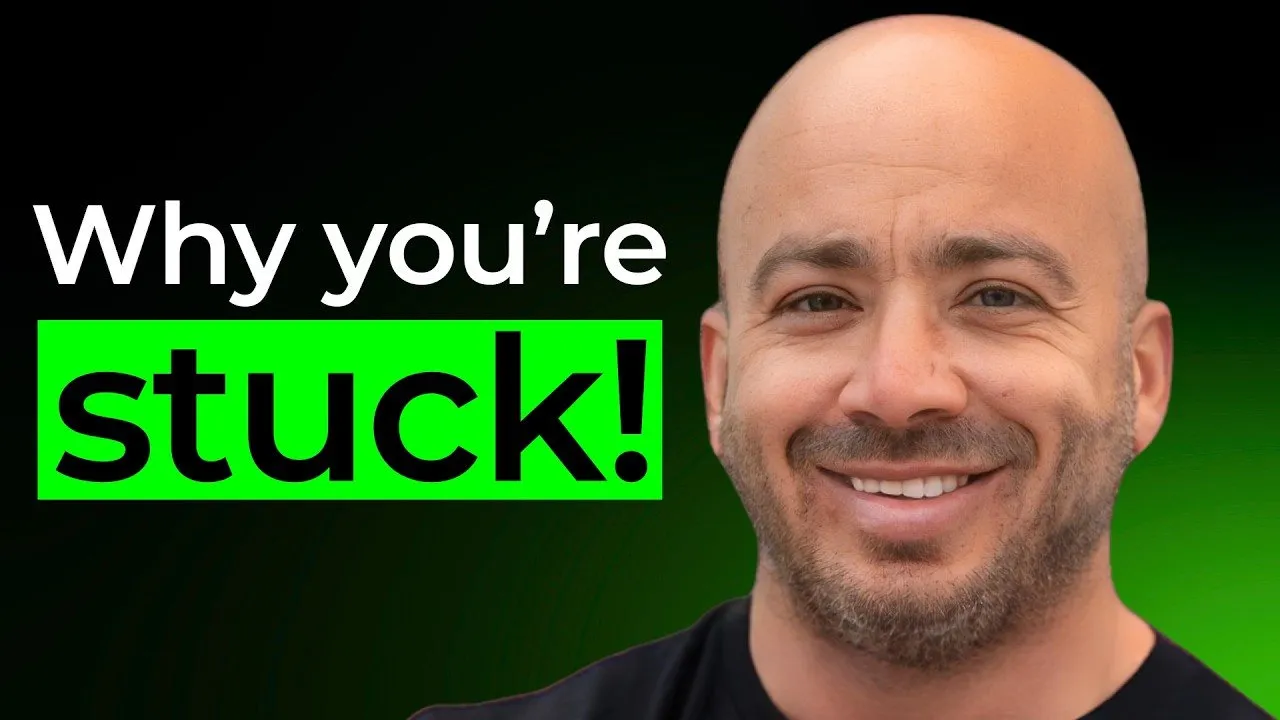

Written by Dan Leibrandt, host of Pest Control Legends and founder of Pest Control SEO
In the early days of Pest Badger, Jonas Olson was running 22 to 30 stops a day. It was COVID and almost nobody was available to hire, so he put a spotlight on his van and kept treating houses after dark.
I pointed out that people see the Audi and the plane now. Jonas reminded me he’s also been the CSR, the salesman, the tech and the guy doing all the callbacks.
So for his third time on the show, I asked him to walk through where pest control owners stall and what gets them moving again. We started at $250,000 and kept finding ceilings all the way to $3M.
Who is Jonas Olson?
Jonas Olson has spent 17 years building service businesses, first in lawn care and now at Pest Badger, where he’s CEO. He started Pest Badger about 5 years before we recorded and has grown it past $10M a year, yet he still tells senior hires it’s a startup, “early in year six.”
His Pest Control Millionaire podcast is probably the biggest show in the industry, with 150 episodes at the time. He and I are partners in Pest Control Millionaires with Jake Sheldon, and the program had over 300 owners when we talked, just over 50 of them past $1M. Jonas has been on this show twice before, on pricing, branding and picking the right market and on A-players and his day with Alex Hormozi.
The technician trap starts around $250,000
Most solo operators can get to $250,000 or $300,000 doing all the service and selling themselves. Jonas has nothing against that, until it becomes the rest of your career, which is what he means by the technician trap. The owner doesn’t trust anyone, or a hire or two quit after a few weeks or months, so he goes back on the route for good.
The fear of that first hire makes sense. At $200,000 to $300,000 you’re probably taking home about $90,000. Pay someone $50,000 and you’re down to $40,000, earning less than your new employee. Jonas says to pay yourself an average wage, not $100,000, and keep healthy profits in the company.
“You can make 50, 60 as long as your bills are paid, your family’s provided for, and then everything extra above that should go back into the company.”
He’d skip hiring a friend, because a great friend isn’t always a great worker. Find someone through church, school or Facebook instead. He goes deeper in why most pest control companies get stuck at $300K.
Price your hour at the company you’re building
Jonas doesn’t think the first employee has to be a technician. At $200,000 or $300,000, you probably work 8 to 10 hours in the field, then spend 2 more a night on billing and scheduling. That’s $20 an hour work, and by then your time belongs on $100 to $300 tasks. Hand it to a CSR or a virtual assistant and spend the 2 hours you get back selling. Dan Martell calls it buying back your time. (Allan Draper told me he’d hire a technician first.)
Jonas values his own time by where the company will be when he’s done, and he wants Pest Badger at $100M.
“Every hour that I’m not spending on Pest Badger is $30,000 an hour, basically, because in the future it’ll be 30,000. So it might as well be 30,000 now.”
A hire doesn’t mean you get to coast half the day, as I told Jonas. If you pay someone $50,000, you go do the things that make the business $100,000.
An 80% tech is good enough
Between $500,000 and $750,000, usually with 2 techs, a CSR and the owner, the job is learning to delegate. Micromanage a little while you build trust, then give people room. Plenty of owners hire good people and still keep control of everything.
Jonas recently spent an hour with one of his best salespeople, an operator who was having a hard time giving up control, asking where the company would be today if its founder had never let go. Even a tech who’s 80% as good as you is worth it, he said, because the customer probably won’t notice the other 20%.
As for getting off the truck, he’d do it as fast as possible, from day one if you have a little capital. At Pest Badger, COVID kept him teching some into year two. His lawn care company shows the slow way. He sat at about $250,000 for roughly 2 years doing everything himself. After he found a mentor, he hired and trained one guy, who stayed about 15 years, and grew to $500,000 or $600,000 the next year.
Put your SOPs on video
The next ceiling runs from about $650,000 to $1.2M. You have 3 technicians and zero systems, and it’s straight chaos. Now you write down your sales process and your SOPs for training, onboarding and offboarding.
Pest Badger once paid a consultant to write its operations SOPs, but ChatGPT or Claude can write your manuals now. Jonas puts his on video, in 2 to 3 minute clips with short tests built in, because he’d rather not read a 10-page SOP. With multiple branches, video keeps training consistent. Video SOPs were new to me, and I told him so. Young techs won’t read a long document, but they’ll watch something that feels like a YouTube video.
We’d just watched a video where Alex Hormozi said you don’t want to build your business the wrong way, so I asked Jonas what that looks like. He pointed to one owner who joined our program with $400,000 to $600,000 a year of one-time work, so every year he had to win it all back. Now that revenue recurs, and his new sales stack on top of it.
A million is the new $100,000
Jonas sees more owners stuck between $800,000 and $1.5M than at any other level. They have 4 or 5 solid technicians and some money in their pocket. They get comfortable, then bored, and chase what he called “a girl in a red dress,” some shiny new project. He hears owners admit they haven’t grown lately, then say happily that they haven’t been in the office in 4 weeks.
A million has become the new $100,000, the number everyone celebrates, and a lot of owners start pulling the cash out. That’s fine if a lifestyle business is what you want. My advice on the show was to pick your number now, whether that means passing the company to family or growing to $2M, $5M or $10M, so you can reverse-engineer it. Check how big your market lets you get while you’re at it.
Getting to $3M takes an operations or branch manager. A good one costs $80,000 to $90,000 and adds no revenue, so it’s the first-hire leap all over again. You learn to manage managers and hold them to their KPIs, and he says you have to recreate yourself every 6 months to keep up. He covers this stage in why pest control companies get stuck at a million dollars.
Spend 5% of revenue on yourself
I asked how he’d grown as a person, and Jonas talked about the gym, getting healthy for his kids, daily reading and paying mentors. People who’ve done it, he said, almost force you to level up with them.
He has spent hundreds of thousands of dollars on mentorship and coaching. If one big takeaway lets him pull a big lever in the business, he told me, he’ll pay for it every time. Then came what I called a hot take. He thinks a leader should spend 5% of annual revenue on self-improvement.
He also believes the way you do one thing is the way you do everything. Shortly before we recorded, he’d told one of his guys he’d be in Minnesota, so he left at 6 p.m., got in at 1 a.m., hit the gym at 6, spent the day with the guys and drove home that night.
“I’m a man of my word. I told them I was going to show up and I showed up.”
I added that you can’t expect your people to care more than you do. You set the standard, and most of the team lands a little below it.
At $3M you’re paying for speed
Around $3M, Jonas says, cash flow gets weird and overhead climbs with all the new managers. Owners who still think they know everything start changing pricing models, and the business stops growing on its own. What the fastest-growing home service companies he visits have in common, he said, is the level of their talent.
Say you can hire a $60,000 person who could probably get you by, or a $100,000 person who has done the job.
“You’re paying extra for these people who have been there and done it. They’re not learning on your dime.”
Those people move the needle from day one. Jonas would rather train a technician with no experience, but for executives, experience is what he wants most.
Senior candidates start with a recruiter. Then James, one of Pest Badger’s leaders, checks culture fit, and Trisha, now the COO, spends an hour or two with them, because he thinks she reads people really well. Jonas goes last, with the same kind of honest talk he described in our last conversation.
He warns candidates about 12 to 14 hour days and calls or texts from him at 10 p.m. or midnight. The week we recorded, one candidate told him he hadn’t clocked in to a 9 to 5 in 30 years and wanted to build something, so Jonas told him he was in the right place.
My take
Most owners at $300,000 value their evenings at what they make today, so doing the invoicing at 9 p.m. looks free. Jonas prices that same hour at what the company could become, which makes it one of the most expensive things an owner does all week. That math is how you get out of what I call the busy loop, where every day feels productive and nothing grows.
Marketing chores belong in that math. If you’re writing Google Business Profile posts at night, or letting the profile sit for months, that’s exactly the kind of work to document and hand off. A profile needs steady upkeep to keep earning calls, and someone in your office or an agency like mine can own it.
Part of getting unstuck is believing the next level is possible. When I started building a following on Twitter, I made friends with guys doing $20,000 a month with agencies. It sounded impossible until I was around them. I see the same thing in our community. John Stopka, who’s 27 or 28, recently posted that he’d hit his first $200,000 month in May, a year after his first $100,000 month, and he’s opening a second office.
Where to find Jonas
Jonas posts on Facebook and LinkedIn a few times a week. On YouTube he puts out a podcast episode every week, plus a PCO tips video most weeks on things like truck setup, pricing, packaging and his own biggest mistakes. He’s spent millions learning this, he told me, and you get it free.

Want more calls from Google?
Book a 30-minute discovery call with Dan to see if we’re a fit.