Pest Control Legends / Episode 31
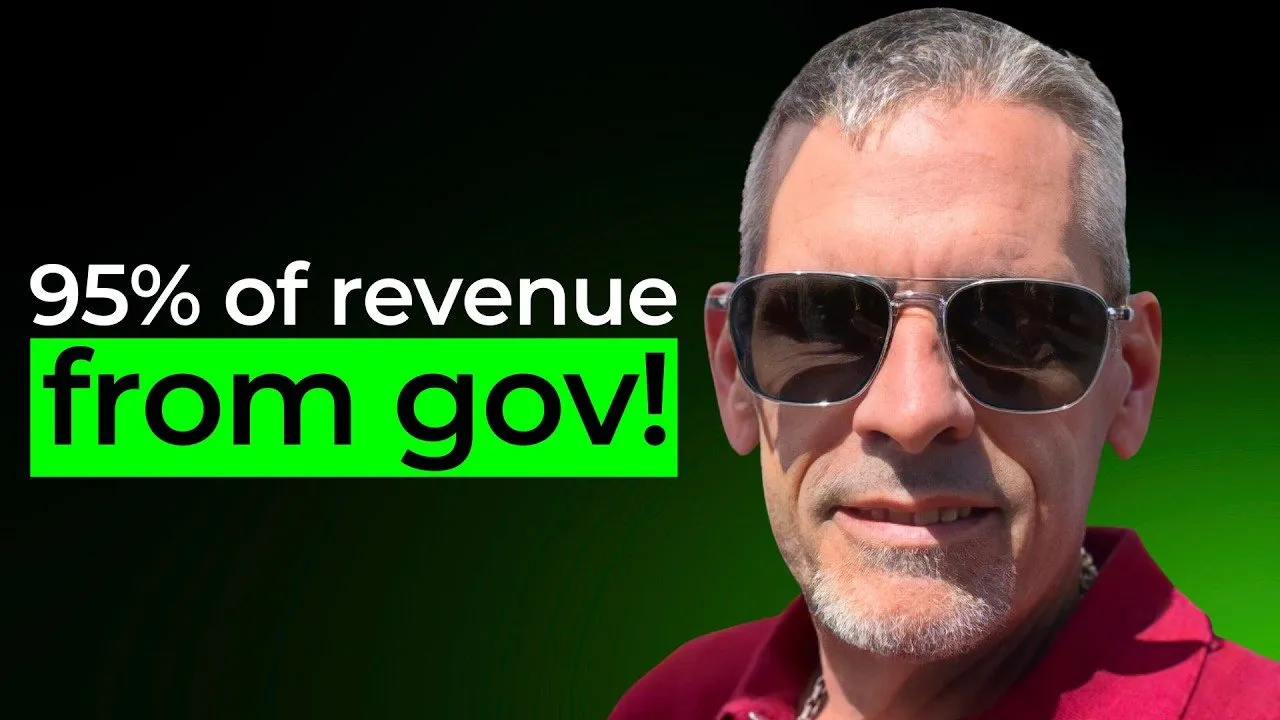
David Poplin on going 95% government with over 62 federal contracts

Written by Dan Leibrandt, host of Pest Control Legends and founder of Pest Control SEO
David Poplin spent 9 months sending out bids for government pest control contracts, working 12-hour days as many as 7 days a week, and he didn’t win one. Today his company, CDS Services Inc., the parent company of Legion Pest Management, holds over 62 federal government contracts and handles pest control for roughly 20% of the VA medical centers in the country.
I first noticed David in the Pest Control Millionaires Facebook group, where he was dropping a ton of knowledge. He’d always seemed like kind of a mysterious figure in the industry, so I wanted to hear how he built his business.
Most owners who watch the show have probably never bid on a government job. David’s business is about 95% government now, and he explained how those contracts are won and kept.
Who is David Poplin?
David Poplin founded CDS Services Inc. and Legion Pest Management in 2013 and runs them as CEO. He joined the Marine Corps right out of high school, served one tour and still carries injuries from it.
His father was in pest control, but David wanted to be a police officer. He took a pest control job to support his family while he was in the last stage of hiring with the LAPD, and when hiring freezes ended that plan, he stayed. More than 30 years later he’s still in the industry. About 2 years before we recorded, he also became a partner in a trade school that trains veterans and people who are unemployed or underemployed for pest control careers.
The certification belongs to the owner
David didn’t use his veteran status in business until 2017. That’s when he realized he could register his company with the SBA and, back then, the Department of Veterans Affairs, and get a real shot at government contracts.
These days the SBA certifies service-disabled veteran-owned small businesses (SDVOSBs). Federal agencies set aside contracts for companies that hold it, and David said some state agencies focus on them too.
Having a veteran on the payroll doesn’t qualify a company. David laid out the basics.
- A service-disabled veteran has to own at least 51% of the business and be actively involved in it.
- It’s typically for standalone companies rather than franchises, though he said franchises have some opportunities.
- It’s an intense process that can take several months.
The first contract took 9 months of bidding
Around 2017 and 2018, David’s condition meant he couldn’t keep pulling hose and crawling subareas and attics. Government work looked like a way out of the truck that would still let him run his residential business. He’d have been happy with 4 contracts.
He had put a lot of his savings into the plan. When the first contract finally came through after 9 months, another followed 2 weeks later, and before he knew it he had 6 or 7 within a year.
Nothing in particular flipped the switch, he told me. He learned the process, got more competitive and found out price isn’t everything.
“A lot of people have this misconception that it’s always about price with the government. And that is true to a point, but I’ve been awarded a handful of contracts where I was not the lowest bidder.”
In those awards, the government weighed his experience, his capability and his CPARS ratings. CPARS, the Contractor Performance Assessment Reporting System, is basically the government’s report card on its contractors. Now agencies bring him opportunities before they hit the open market, in the US and internationally, and his team decides which ones fit. He has nothing against residential. Government work just fit his business model better.
Winter doesn’t slow government work down
Back east, with 3 feet of snow on the ground, government sites still get serviced. During COVID his business grew 20%, and not one contract was put on hold or stopped.
In return, the government expects more. A homeowner with ants wants them gone fast but is usually more understanding, while a federal contract may set a required response time.
He’s heard that government work means lots of paperwork and slow pay. The paperwork part is true, and a box you forget to check can delay payment. But his team has gotten so good at processing that 70% of its contracts typically pay within 15 days. Most bill monthly in arrears, so you finish the month and then invoice.
At medical centers, bases and other government property, the pests are the same ones you treat. Termite work is just bigger (his company has fumigated several federal facilities), and warranties get less focus than in residential.
Your rating starts with the scope of work
David landed the VA medical centers the way good pest control companies usually grow. He earned the trust of the first couple, got high CPARS ratings, and contracting officers started referring him to other contracting officers. David said the current administration is focusing even more on contractors with good ratings.
A good job, David said, starts with following the scope of work, because agencies rate you against it. When you bid, challenge and question anything that isn’t clearly outlined. (Paul Alley, whose company services West Point, told me how detailed those contracts get.)
They also rate responsiveness, on site and in communication. When an agency reaches out during business hours, his team responds within the hour, which he says is kind of unheard of in government contracting.
Treat subcontractors like your own team
Work in California, especially Southern California, is done in-house. Outside that area, David’s company hires other pest control companies as subcontractors, and it’s licensed in multiple states for solicitation reasons. When we talked, he had about 21 employees and probably 40 subcontractors.
He looks first for veteran-owned companies or ones with veterans on the team, and for family-owned small businesses trying to grow. He matches each partner to the job by service frequency, responsibilities and scope of work, and he won’t let a partner bite off more than it can chew.
He calls them teaming partners and treats them like employees, with clear communication and expectations. When a partnership goes well, that company gets first right of refusal on new work in its area.
David started as a one-man operation that grew slowly, so to him this is a way of giving back. Most federal contracts run 5 years, he said, which can give a small partner 5 years of steady revenue, slow winter months included. His favorite part is seeing a partner add vehicles, equipment and staff.
Plan your next hire before you need it
David’s first hires were field technicians and specialty operators like termite techs. Then he needed structure for management, admin and support, and when we talked he was restructuring again to add a layer of senior management.
Early on, growth caught him off guard. He’d wait until he needed someone, then find out it takes a couple of months to get the right person.
“You can’t wait till you need it before you get it. You got to plan ahead.”
Now he plans a year to a year and a half out. His team includes 6 or 7 account managers on the government contracts, a contract development group and 3 senior leaders. He was also looking for a VP of operations with branch-level management experience, someone who can read P&Ls and create action plans.
He’s just as firm about outsourcing marketing, bookkeeping, social media and anything else you’re not best at. “The money you think you’re saving, you’re losing in revenue,” he said. When I said a solo owner doing every task tends to cap out around $300K or $400K, he added that you’ll also slow your growth down. (Jake Sheldon wrote up which marketing tasks to hand off first.)
You don’t own your customers
David learned fast growth at Terminix. As a sales manager in the LA region around 2001 or 2002, his branch had a termite budget of $400,000 or $500,000 a month, and Terminix wanted 20% more than whatever they’d sold in the same month the year before. Terminix is also where door knocking first clicked for him. After he left, he worked for a door-to-door company to see from the inside why it was so successful. In the biggest year he was part of, they took on 6,500 customers in a 3.5-month stretch. (I’ve also talked door-to-door with Lenny Gray.)
When I said door-to-door can be done ethically if you actually care about people, he took it further. In his opinion, the industry’s big misconception is that we own our customers. A customer who knows their technician has a kid at the local school won’t cancel when someone knocks with a better deal, but one who doesn’t know you might. You have to keep earning the business.
Communication matters most, he said.
“You can actually communicate effectively and have killing bugs as a secondary and be rated very well. It’s all about communication.”
A tech who skips the knock, does a 10-minute exterior and hangs a ticket on the door isn’t building that relationship.
Veterans already have what makes a good technician
David joined the trade school as a partner because he saw the need. The school is certified at the federal and state level, had a contract with the VA and focuses on transitioning service members, getting them trained and licensed. It also takes people who are unemployed or underemployed, gets them licensed and connects them with companies that need good technicians.
Military people are structured and on time, David said, and they bring skills that make a technician successful. He doesn’t think the industry’s staffing shortage comes from people not wanting to do pest control. They just don’t realize the opportunity is there, because we don’t market the industry to anybody.
For a veteran starting out, he says to learn termite, general pest and wildlife, since a door may open later. Get licensed, even if your state lets you work under a qualifying operator. From there, a technician can move into inspecting, the office, leadership and eventually ownership.
My take
David’s closing advice was to set goals, make action plans, hold yourself accountable and let nobody stop you. He lived it, too. He set out to win 4 government contracts, kept bidding through 9 months of losses and ended up with more than 62.
I’d copy his one-hour reply first. By David’s account, an answer within the hour is almost unheard of in government work, and I’d bet it’s rare in residential too. A homeowner will never see your CPARS rating, but they’ll read your Google reviews before they call. Both are report cards built one job at a time, which is why I care so much about a steady flow of new reviews on a Google Business Profile.
On the show I told David I don’t think AI will ever replace relationships. Even if a robot technician shows up someday, you’ll keep the company whose tech has serviced your home for 5 years. I also told him most owners I meet aren’t short on effort. They’re missing information, like how to structure a company or generate leads. David said if programs like Pest Control Millionaires and the Facebook groups had existed when he started, he’d be 10 or 15 years further ahead.
Where to find David
David is active in a lot of the pest control Facebook groups, and he said owners can look up CDS Services Inc. to reach him.
- Government work: CDS Services Inc.
- Residential and commercial: Legion Pest Management
- Facebook: David Poplin on Facebook
- LinkedIn: David Poplin on LinkedIn
Want more calls from Google?
Book a 30-minute discovery call with Dan to see if we’re a fit.