Pest Control Legends / Episode 25
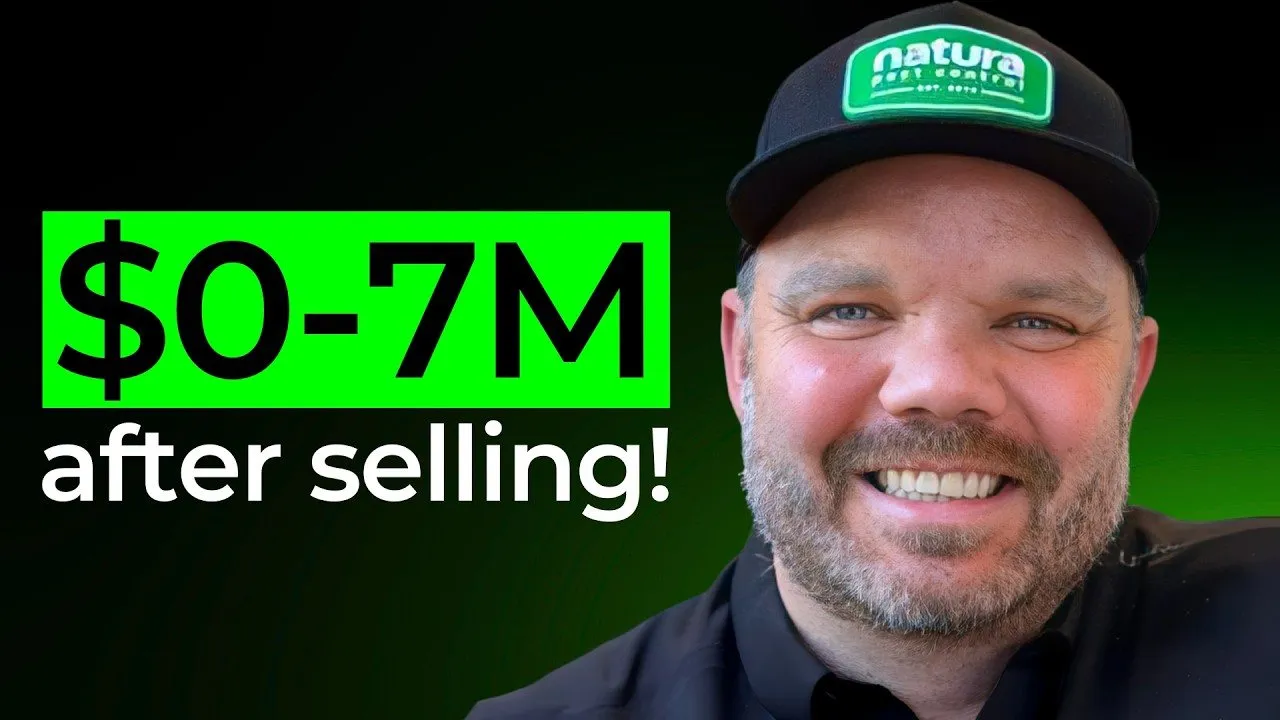
Greg Young on selling Natura for over $4M and rebuilding to about $7M

Written by Dan Leibrandt, host of Pest Control Legends and founder of Pest Control SEO
In January 2017, Greg Young sold his first pest control company for over $4M. By April he was starting over in Reno, Nevada, under the same name, Natura Pest Control, and he has since built back to roughly $7M in revenue.
I knew the Natura name from interviewing Eric Bassett twice. Until Greg and I met through the Pest Control Millionaires Facebook group, I didn’t realize Greg and a friend started Natura back in 2012.
Greg doesn’t sugarcoat his first run. The California company could sell, but it had a hard time keeping customers, and Reno runs on the plan he wrote to fix that.
Who is Greg Young?
Greg Young is the co-founder of Natura Pest Control and has spent nearly 20 years building pest control businesses. After serving a church mission, Greg swore he wasn’t going to waste his time knocking doors. Then his buddy (later his Natura co-founder) made great money selling a summer for Clark Pest Control. Greg joined him the next year, and in 2008 or 2009 they started a marketing company that placed 60 to 90 door-to-door reps a year with pest control companies, mostly in California and Texas.
Natura opened in Turlock, California, in 2012, and Greg says that branch put on $1.1M to $1.2M in its first year. They also partnered with Eric Bassett’s brother-in-law, Jake Claus, and his wife on a branch in Vancouver, Washington. In 2017 Terminix bought the California business, and that April Greg opened in Reno, where he now runs Natura with his partner, Andrew Burress.
Be honest about what you really want
All 3 owners of the California company were salespeople, and it showed.
“We were all salespeople at heart. And so we built a sales business that was acting like a pest control company.”
If they were being honest, Greg said, they cared more about selling a lot of accounts than about being great at pest control. They sold plenty, but they never ended up with customers who stuck around or employees who loved their jobs.
Back then he didn’t even know his own top line, only his customer count.
Greg thinks a company turns into whatever its owners actually want. If you chase revenue, you can get plenty of it and still not make much money, and if you chase margins, you might stay small.
These days he wants a $20M business by the end of 2028, one that creates “peaks” for its customers and grows its people. Further out, he wants Natura in the top 20 of the PCT Top 100.
Partners need the same destination
Greg has had 6 different business partners and still calls himself “a partners guy.” He says it works as long as you’re headed to the same destination.
After a big milestone, what you each want can change. That’s why people say to build out a partnership agreement before you start.
Greg went through this himself. He had worked with his co-founder since 2005, and in mid-2024 they realized they wanted different things. His partner saw that staying would hold Greg back, and Greg saw he was holding his partner back too.
After 20 years, that triggered an exit. Greg still calls him one of his very favorite people in the world.
He also warns against the “false yes,” when someone agrees only because the other person had the better argument.
In partners and leaders, Greg looks for hunger first, and he’s shown plenty of it himself. In California he went about 20 months without a full paycheck and burned through his savings.
Your business should outgrow your expertise
On the idea that partners should have different skill sets, Greg says it’s generally good advice when you’re small and wearing a lot of hats, but it’s not a hard rule.
Greg pointed to Andrew Burress. As a California branch manager, Andrew saw the owners were 3 sales guys, learned pest control like crazy and became an insanely good operator, so they made him a partner.
Today Andrew isn’t the operator and Greg isn’t the sales and marketing guy. Natura has people who are better at those jobs than either of them was.
“Your business will get to a point where it outgrows your expertise, and if it doesn’t, you’re probably the bottleneck in your business.”
One of the first things California taught him is that a team’s success is most closely linked to its immediate manager. Natura opened multiple branches fast without a leadership bench, and they had serious growing pains.
Now, instead of “how are we going to do this?”, his team asks “who’s going to do this?” Greg says that idea, from Dan Sullivan and Benjamin Hardy’s book Who Not How, was revolutionary for them.
Stop playing the price game
In California, 3 employees sued them 4 times over what Greg calls bogus claims, and it wore them down. Customers were leaving too fast, so Greg moved from sales into operations and wrote a new operating plan.
Then Terminix made an offer, and the Vancouver partners offered to buy out the California owners’ share of that branch. Fixing the old business would have taken an estimated 3 to 5 years, and selling let him run the new plan from day one.
The biggest change, Greg said, was his view of money. The first company ran on a shoestring. They hired technicians by the hourly wage instead of hiring the best, and played a price game to help reps close.
After the sale he never wanted to be tight financially again, so Natura charged a good amount and sold on value, still door-to-door. Provide value to your customers and employees, he said, and everything else kind of works out.
Build every process around the customer’s experience
Greg believes owners run their companies through the filter of their old job. Former techs run it like a tech, and former salespeople (like Greg in California) keep tracking sales metrics. I’d never heard anyone in this industry put it that way.
So Greg started looking at the business as a customer. That became Natura’s customer experience roadmap, now 7 steps, running from brand awareness to being a loyal customer for 50 years. Every core process and policy sits under it, because a process can be efficient for you and still burden the customer.
Say a customer at the door can’t do the service today, and the tech tells them to call back and reschedule. Greg says that’s exactly backward.
“You’ve just passed the ball to the customer and that’s not the customer’s job. It may be the customer’s fault, but at the end of the day, it’s the pest control company’s problem to solve.”
When a manager wants to skip or combine steps, the answer is no. The roadmap sets expectations, exceeds them early, confirms the job got done and keeps Natura from contacting customers too much.
Churn tells you whether your growth is real
At one point in California, Greg saw 38% churn for the year and had a panic moment. High growth was the only thing keeping them in business, and churn was killing them. Over the life of the California business, they added about 18,000 accounts and had 8,000 left when they sold.
Natura now loses 15% to 16% a year. In 2023, a big door-to-door growth year, it hit 18%. In 2022 they ran no door-to-door, still grew between 10% and 20%, and lost about 12%.
When we recorded, he expected about 14% to 14.5% for the year. The team is pushing for 12%, and the goal is 8% by 2028.
Greg doesn’t claim to be the best. When he recently sat with an owner who has lost only 2% of his customers in 4 years, his first thought was what he could learn from him.
Door-to-door works best for new branches and acquisitions
A door-to-door post in our Facebook group drew about 80 comments, many against it. Greg thinks it’s “certainly ethical.” There are unethical reps, he said, just as there are unethical owners who never knock a door.
He likes door-to-door in 2 situations:
- A greenfield office. Short of an acquisition, nothing gets a new branch to a target revenue faster. Reno reached $1.2M to $1.5M in its first year, paid its reps and cash flowed. But if a branch stalls under $1M, you’re in for a few brutal years.
- Right after an acquisition. If route density isn’t tight, put a door-to-door team on top to densify. Natura did it with 2 acquisitions. It was really expensive, and it made those branches instantly more valuable.
He cautions against using door-to-door as your only channel for the long haul. Single-channel risk makes it hard to make money, and growing accounts to sell is becoming less of a real option for door-to-door companies. To owners who plan to knock for 6 years and then go digital, he says that switch isn’t easy.
Get diversified, he said, hire a good SEO company and get your Google reviews up. He named Jonas Olson as a good exception, because Jonas has avoided that single-channel risk (Jonas breaks down how Pest Badger runs its door-to-door team). For the selling itself, see my conversation with Lenny Gray.
Cheap SEO can rank you without growing you
Natura ranks well in its markets, but leaning on door-to-door for so long led to a mistake Greg tells other owners to avoid.
“We would hire cheap SEO providers that would help us rank but didn’t help us convert leads.”
Now an SEO specialist on the team manages the vendors, and the plan is to bring it all in-house over the next 12 to 18 months. Outside door-to-door, Natura adds 900 to 1,000 accounts a year through Google LSA, organic Google and referrals. They’re pausing door-to-door and going hard into other channels.
My take
I keep coming back to Greg’s closing advice. He says an owner’s job is to find the #1 constraint holding the business back and do everything possible to remove it, and that means being willing to admit the bottleneck might be you.
I’m biased on the SEO lesson, since it’s my whole business, but a ranking that doesn’t turn into booked calls doesn’t pay the bills. I’ve audited hundreds of pest control Google Business Profiles, and ranking is only step one. You still need reviews, photos and a website that makes calling easy before a ranking turns into a customer.
Greg’s warning about single-channel risk applies to digital too. Zip Code Kings, the book I co-wrote with Jonas Olson and Jake Sheldon, covers the other channels, including branding, traditional marketing, local SEO and Facebook ads.
Where to find Greg
Greg loves talking with other pest control owners, so reach out. He’s also in the Pest Control Millionaires Facebook group.
- Website: Natura Pest Control
- LinkedIn: Greg Young on LinkedIn
- Facebook: Greg Young on Facebook


Want more calls from Google?
Book a 30-minute discovery call with Dan to see if we’re a fit.