Pest Control Legends / Episode 27
Ryan Marshall on service managers, technician upgrades and cutting route miles in half

Written by Dan Leibrandt, host of Pest Control Legends and founder of Pest Control SEO
Early on at Vinx Pest Control, Ryan Marshall would promise a homeowner he’d take care of their ants, then go sit in his truck and look up on YouTube how to do it.
He started Vinx in Utah in 2015 with a new Costco credit card (a $10,000 limit), a white truck he already owned and some stickers he ordered online. Coming from sales, he figured getting customers was the hard part and servicing them would be easy. He quickly learned he knew nothing about service.
Eleven years later, Vinx services tens of thousands of homes, and service took up a lot of our conversation. When owners want to grow, Ryan thinks the people they overlook are their service managers, not their sales reps.
Who is Ryan Marshall?
Ryan Marshall founded Vinx Pest Control and runs it as CEO. The company is headquartered in Utah, with offices in South Carolina, North Carolina and Virginia. When I introduced him on the show, I called Vinx one of the top players in the industry.
Ryan got into door-to-door in college, selling alarm systems, until some buddies talked him into selling pest control. He liked it, but he was making promises at the door and hoping the company would keep them, and a lot of the time it didn’t. After talking it over with his wife, he started his own company so he could deliver the service too, and suddenly had to deal with payroll taxes, QuickBooks and collections. Vinx later opened a branch in Dallas, which it sold about a year before we recorded.
Service managers belong in the field
That first summer in Dallas, Vinx hired a service manager at $16 an hour. Cash was tight, and Ryan says you get what you pay for. A good service manager makes a huge difference in service quality and technician turnover, and turnover makes it really hard to stay consistent for customers.
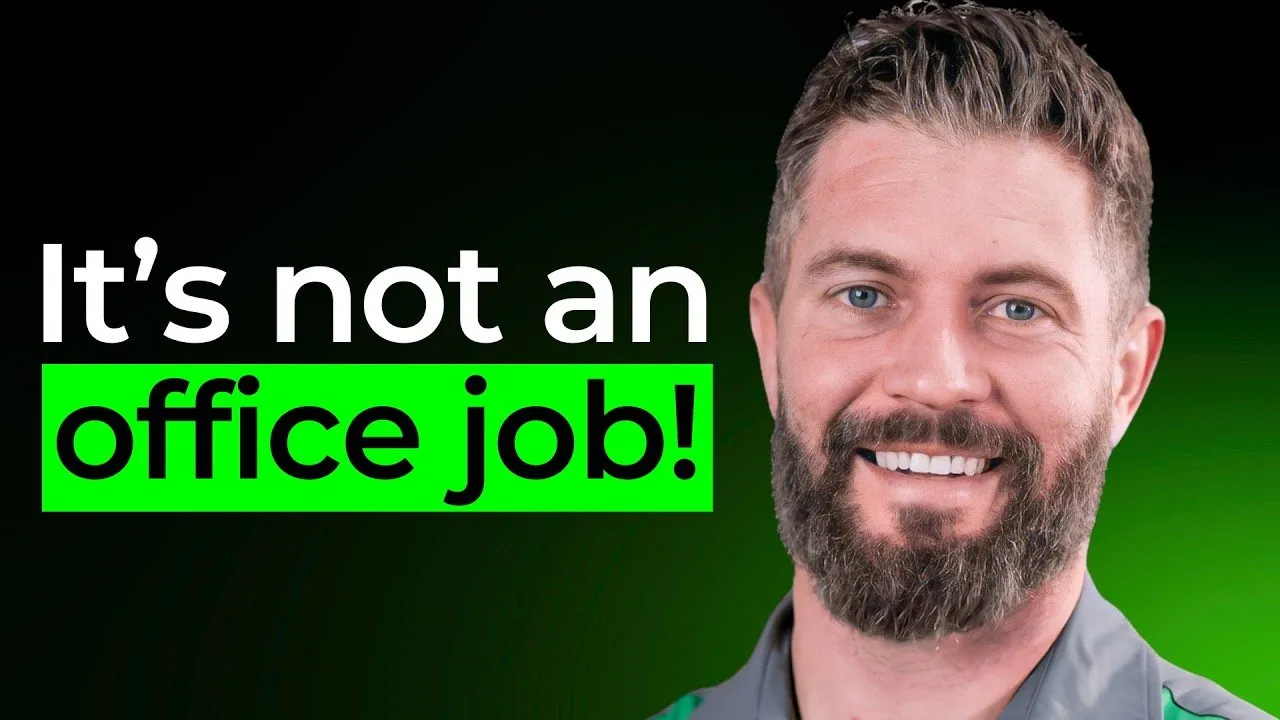
Today Vinx hires sharp people who have been in the industry a while, and above all, they have to know it isn’t an office job.
“We really push the idea with our service managers that you can have up to an hour of office time per day, but outside of that, we want you in the field.”
The rest of the day, they work alongside technicians, teach them to bring up termite protection or rodent exclusion, and coach them on customers, safe driving and reviews. Someone can have 20 years in the industry, Ryan said, but if they’ve never coached people and held them accountable, it falls apart quickly. Thinking out loud on the show, he said Vinx ought to rename the job “service leader.”
Door-to-door companies are great at getting people to switch and often weak on service, so a lot of those customers fall off. A stronger service side is how Vinx keeps more of what its reps bring on.
Give technicians their own reason to upgrade customers
When Vinx started pushing techs to recommend upgrades like Sentricon, some guys flat out didn’t want to talk to people. Ryan’s team had to sit down with them. A lot of those techs were saving to buy a house, so the conversation turned to how they could put away an extra $400 or $500 a month. Leading door-to-door reps had already taught Ryan that people aren’t out there for the owner’s reasons.
I’d interviewed Preston Peterson of Alta a few days earlier on the same topic, so I asked Ryan to confirm he meant paying techs a commission to upsell. He did, but he won’t use that word.
“We’re really careful not to say the sell word or the upsell word because a lot of technicians get panic attacks. So we call it upgrades.”
Vinx frames it as something customers already expect. If Jiffy Lube spotted your flat tire during an oil change and said nothing, you’d be upset. I compared it to a doctor who finds cancer and keeps quiet. Homeowners have a right to know about termites, too.
Keep the pitch to one line
A lot of techs think selling means being pushy, so they talk themselves out of it. Ryan’s answer was to make it really simple. For a long time, Vinx told technicians it didn’t care whether they got any upgrades. They just had to talk to every customer who was home, and in meetings they roleplayed one line.
“Hey, Mrs. Jones, just got done doing your service. By the way, I noticed you don’t have any termite coverage. Most of our customers do. Do you mind me asking what you’re doing?”
Once customers started asking how much, Vinx taught techs to explain pricing and to call their service manager if they got stuck. For termites they follow CARE, which stands for check the yard around the house, ask, recommend and explain pricing. My partner Jonas Olson has written up how service-call upsells work at Pest Badger.
Be the Bannister
Things really turned once a few guys on a team were getting 5 to 10 upgrades a month. Ryan calls it the Roger Bannister effect, after the runner who broke the four-minute mile, and “Be the Bannister” is one of Vinx’s core values. If Joe got 10 last month, everybody else figures they can too. When a tech gets 3 in a week, he’s asked for his pitch in the meeting, and someone points out he just made an extra $350.
Ryan won’t call Vinx a family. In one training, he put “we’re a family” on a slide, crossed it out on the next and told the team that’s the F word. Vinx is a team. Once a month, service managers cook breakfast for their teams on griddles the company bought them, then everyone joins a companywide meeting with shout-outs for top technician and top branch. In their Pronto chats (Ryan describes it as Slack for pest control companies), branches tell each other they’re going to beat them on upgrades that week.
Retention starts before the first service
Vinx still knocks doors, though it’s working to diversify. Ryan thinks door-to-door is one of the best ways to open a market because it builds route density, while SEO and pay-per-click might bring one call from one side of the city and the next from 20 miles away.
Keeping those customers comes down to expectations. If someone believes they’ll never see another bug, Vinx will fail them. So when a rep signs someone up, he hands over the iPad for an AI welcome call from Apruv. It covers the 12-month agreement, the monthly price, what’s included and what isn’t, and how the cancellation fee works. Reps know that call is coming, so they’re a lot more careful about what they promise.
Vinx also looked at what customers paid for their first service. As Ryan remembers it, customers who paid around $99 or more were about 3 times as likely to be good customers at the end of the year as those who paid under about $69. Now reps keep everything above a floor of about $75 as a bonus, so a $150 initial service earns them an extra $75. Ryan compared it to buying a truck. With no money down, you might let them take it back, but with $20,000 down you’ll find a way to make the payment.
Show customers what they’re paying for
Apruv also tracks 4 technician KPIs that Vinx pays bonuses on: upgrades (the target is 5 a month), reservice rate, driving score and proof of service. For about 6 months, Vinx techs have recorded a selfie-style video at every home.
“We’re selling the absence of something, right? We’re not selling anything tangible that the customer can put in their hand.”
A lot of customers aren’t home during the day and might not see a tech for a year. If they aren’t seeing bugs either, it’s easy to look at the monthly charge and think about canceling. Now each visit ends with the tech greeting the customer by name and flipping the camera to show what he did, like a massive wasp nest he knocked down. Customers have been thanking them for it. Ryan doubts many of them ever read the tech notes in FieldRoutes.
The videos let Ryan hear how his techs talk to customers, and he winced through the first few. Now he can tell them what not to bring up and keep expectations consistent across the company. Vinx already trains its door-to-door reps to say agreement instead of contract, take care of instead of kill and products instead of chemical.
Start EOS yesterday
When I asked when a company should implement EOS, the operating system from the book Traction, Ryan said “yesterday.” Vinx waited until it was pretty big. For years it ran and gunned and threw accounts on with door-to-door, and Ryan treated money in the bank as his barometer. Changing that at their size came with some collateral damage. When Vinx finally pushed upgrades hard, it lost some people who said this wasn’t what they signed up for.
Now the leadership team holds a weekly Level 10 meeting, and the director of field operations in South Carolina runs one with all the service managers. Every week they count subscriptions, subscriptions added and cancellations. Field operations tracks points per day. A general pest service is 1 point and a Sentricon check is 2, and techs aim for 15. Jonas keeps a longer list of technician KPIs for Pest Badger.
Average miles per route used to run in the 50s. Many weeks now, they’re in the low to mid 20s, thanks to door-to-door density and smarter scheduling. A scheduler looking at everyone due over the next 2 weeks, instead of the next 3 days, can build much tighter routes. When a customer texts that today doesn’t work, customer service starts calling nearby customers who weren’t due until next week. Techs make more money, especially the production guys.
My take
On the show I told Ryan I’d never heard pest control described as selling the absence of something. As a marketing guy, I’ve found it harder to market than a car dealership that can show off a new Mustang. Real photos of your techs and their work on your Google Business Profile do some of what Ryan’s videos do, only before anyone signs up. I’d run his word list against your website too, because “chemical” reads the same on a service page as it sounds at the door.
When I recapped Ryan’s closing message, I said you’re probably the bottleneck, you need to become a student of the game, and A-players are worth it every time. Ryan is still working on delegating. If someone else can do a job 80% as well as he would, he says, that has to be 100% okay. Paying up for A-plus people was one of the harder lessons for him, because a growing company never feels like it has the cash. Some of those hires left him wondering why he didn’t do it sooner. Jonas went as far as spending months recruiting a single A-player for Pest Badger.
I heard the same people-first thinking when I recorded with Tony Hoffman and Greg Lake of Rumble Pest Solutions. Invest in your team, and the better service and longer-lasting customers tend to follow.
Where to find Ryan
When I asked about social media, Ryan said Facebook is where he is, and he’s happy to connect, so send him a friend request.
- Website: Vinx Pest Control
- Facebook: Ryan Marshall
- LinkedIn: Ryan Marshall


Want more calls from Google?
Book a 30-minute discovery call with Dan to see if we’re a fit.