Pest Control Legends / Episode 41
Jason Carpenter on Building Environmental Pest Management Around Multifamily and Selling to Anticimex
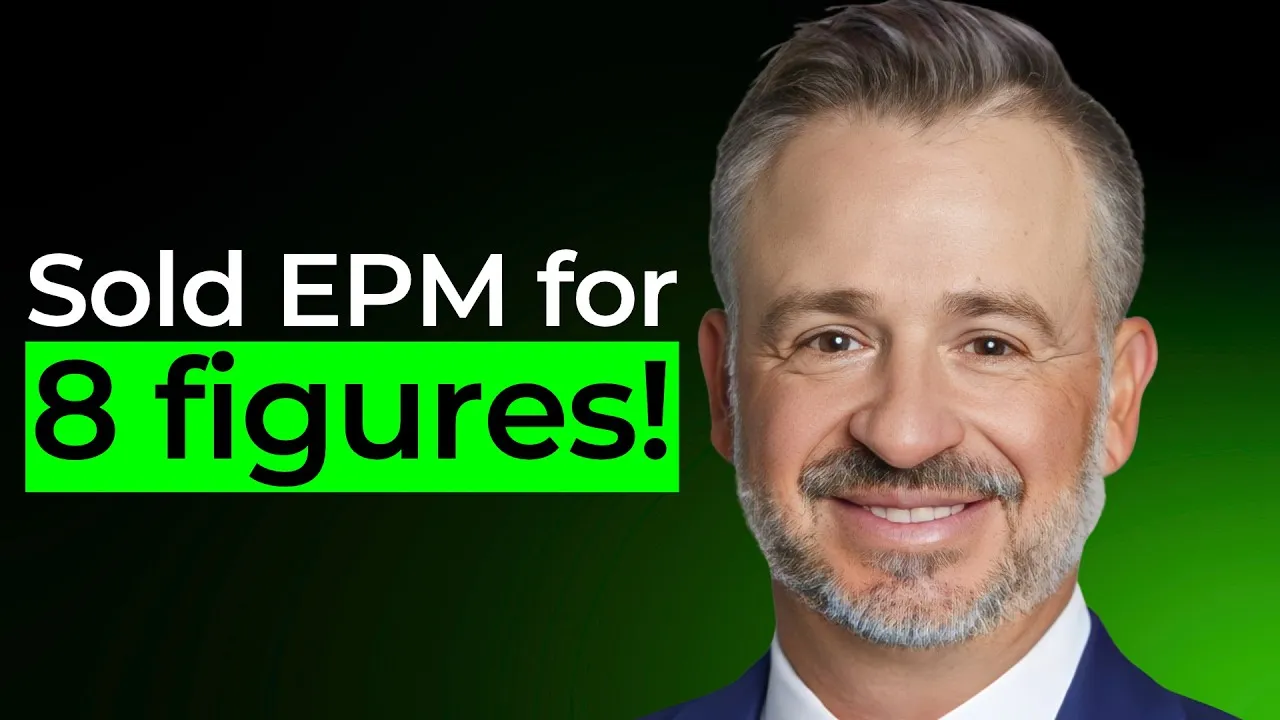

Written by Dan Leibrandt, host of Pest Control Legends and founder of Pest Control SEO
Jason Carpenter never wanted to work in apartments. When he started Environmental Pest Management out of his basement in Hilliard, Ohio, in 2003, he wanted the suburbs and the nicer homes.
A few years in, a property manager asked him to look at bed bugs in one building. That job pointed him toward apartments, and EPM became the largest multifamily pest control company in the Midwest. A little over 2 weeks before we recorded, Jason sold it to Anticimex as its platform company for the region.
EPM got there spending 0.5% of revenue on marketing. I run a marketing agency, so I wanted to know where the money went instead.
Who is Jason Carpenter?
Jason Carpenter is the founder of Environmental Pest Management (EPM) in Columbus, Ohio. He got into pest control around 1990 as a technician for a small family business, back when everything ran on pen and paper, walkie-talkies and carbon copy invoices.
In 2003 he took out a second mortgage, traded in his car for a truck and went out on his own. EPM grew into a PCT Top 100 company with about 90% of its business in multifamily.
It was a family business, too. His wife, Karen, was the COO, and his oldest son, Brandon, now runs it as platform president. Paul Giannamore and Franco Villanueva-Meyer of The Potomac Company advised Jason on the sale.
A property manager is worth a lot of Mrs. Smiths
That first building had 3 floors of 10 units, and all 30 units had bed bugs. After EPM treated it, Jason got curious about the 10 other buildings on the property. He offered to inspect them for free if the manager would go with EPM for the treatment. She agreed, and 7 of the 10 had bed bugs.
That night he wondered how many other properties she managed. It was 35 more sites and 5,000 units. Then he wondered how many other managers were like her.
“Instead of chasing a thousand Mr. and Mrs. Smith, I could have one main contact, and I just felt like that was the better way to go.”
He could park the truck in one place instead of driving all over town and grow a lot faster. That one account came to $300,000, or as Jason put it, a lot of Mrs. Smiths. Some of the work was in Section 8 and HUD housing, a long way from the suburbs, but that’s where the action was.
Know your top 10 before you meet them
Once Jason went all in on multifamily, he made a list of the top 10 people in the local apartment industry he wanted to meet. He researched each one, so he’d be ready if he ever sat across from them at lunch. Every person on that list became an EPM client.
His way in was the Columbus Apartment Association, where owners and managers show up for fundraisers and golf outings. Jason ranked the companies by units under management and worked his way down from the top.
He got choosier after some accounts didn’t pay and some out-of-market owners skipped preventive maintenance and flipped the property. His best clients were locally owned management companies planning to hold their properties long term.
Property managers are paying for information
In an apartment building, you can’t treat one unit by itself. If EPM was working the middle floor, it needed to know what was happening in the units around it. Then there are keys that don’t work and residents who aren’t prepared, and the owners still expect zero pests.
Jason created his own software, Pest Genius, to keep track of it all. Everyone’s vibe coding software these days, but he built his years before that, to solve a problem in his own business.
He’s proudest of what it grew into, a way to show property managers what’s happening in each building and what EPM recommends. After Ohio moved bed bugs under the Department of Health, health officials and eviction courts got involved. EPM has supported clients in court more times than Jason can count, with Pest Genius up on the screen.
Most companies get hung up on price per door, but Jason thinks these accounts come down to the problems you solve for owners and managers.
Get in a room with people who’ve done it
I’d just posted in the Pest Control Millionaires Facebook group that most owners get stuck between $250,000 and $500,000 a year. Jason had the opposite problem. The phone was ringing off the hook, and he was working 70 or 80 hours a week with no days off.
Around 2011 he joined EO, the Entrepreneurs’ Organization. For the first time he saw other owners going through the same things he was, and they shared from experience instead of telling him what to do.
What he really wanted was the mentorship program, where owners running $20M to $100M companies would give him an hour a month. Jason’s only questions were when, where and how long he got.
He ended up with 5 mentors and did everything they told him, and it taught him not to be afraid to ask for help.
Your vision has to include your team
Jason’s first mentor, the one who changed his life, asked what EPM was trying to achieve and how it would get there. EPM was doing about $2M a year, and Jason couldn’t answer.
When the mentor asked what he saw for the company when he closed his eyes, Jason said money. The mentor wanted to know how that would get his people to come in every day, and said it seemed kind of selfish.
Jason couldn’t eat or sleep after that.
“He didn’t do it to offend me, he did it to challenge me. I’m so glad he did that.”
Jason settled on a vision to be consistent and deliver an exceptional experience, and once he had it, everything else flowed like water. He started asking how to create a thousand more Jasons and Karens, and what systems that would take.
Later he blended that mentor’s approach with EOS (the Entrepreneurial Operating System). He doesn’t think the full EOS program fits an owner at $250,000 to $500,000, where there’s no extra money anyway. He’d break it into attainable actions and go grow the company.
Keep the customers you already paid for
Jason read about the Ritz-Carlton experience, but it clicked for him at Bern’s Steak House in Tampa, where the kitchen floor was clean enough to eat off. He never even looked at the bill, and afterward he and Karen agreed EPM needed to be like Bern’s.
EPM spent 0.5% of revenue on marketing and put its money into training, retention and customer experience. New customers cost so much that Jason didn’t want to upset the ones EPM already had.
He maps it out as the customer experience cycle, a wheel showing which employees own each part. Much of it happens before you get paid, like whether the website is clunky and how fast someone answers the phone. If one spot clogs, the whole experience suffers, so EPM put metrics on every role and made the standard non-negotiable.
I asked Jason what’s most underrated in customer experience, and he said to answer the damn phone. When he worked alone, he’d tell callers he was on a job and would call back in an hour, and then he did. Tony Carder said the same thing on the show and wants to write a whole book about it.
Consistency gets harder at scale, so I asked how EPM handled it. Part of the answer was hiring former property managers as account managers, because they speak the client’s language.
“We’re not there to kill the bug. Yes, that’s one of the reasons, but there are a hundred other steps that have to be involved in that in order for us to get the result that we’re looking for.”
Revenue doesn’t get you paid
Jason hadn’t planned to sell. After years of listening to Paul, he met with Paul and Franco in Puerto Rico and came away knowing EPM’s profitability wasn’t where it needed to be for the number he wanted. EBITDA and net profit had to be significantly higher. Christian Ludwig, who sold Aruza to private equity, now tells owners not to build a company to sell at all.
Franco gave him a list of changes, and Jason reported back weekly and monthly on what EPM had saved. Franco told him he didn’t care if Jason sold, because the changes would put extra money in his pocket either way.
Jason went after it like a dog with a bone. Before that, he’d spent years just growing, figuring revenue was what made the business worth something.
“I have real world experience. I know what gets you paid. And it’s not revenue.”
Getting EPM’s numbers up took what Jason calls a 2-year tantrum, with hard conversations between him, the executive team and the family. He brought in an advisor he’s known since seventh grade to be the buffer. Jason credits Karen, Brandon and EPM’s finance manager with dragging the deal across the line.
Buyers who pass will tell you why
Jason’s original plan was to hand EPM to his son Brandon and daughter Kayla, and for him and Karen to ride off into the sunset when he turned 62. Franco suggested testing the market first. Jason was on the fence until LOIs and NDAs started coming in.
He treated the meetings as a chance to learn. Different buyers want different things at different times, and the ones who passed said why, whether EPM was too small, the EBITDA didn’t fit or the geography didn’t work. Some of the reasons the largest buyers said no were reasons Anticimex said yes.
Once Franco got the number that made Jason say yes, they closed in less than 90 days. EPM asked for each due diligence agenda ahead of time and showed up with the answers, and the last-second surprise Jason kept waiting for never came.
Only 6 people knew until the deal was nearly done. Afterward, one of his technicians spotted him at Tim Hortons and told him he and Karen had built a good company. When Jason called Sean Steves, president of Anticimex North America, to offer help, even washing a truck, Sean told him the company runs without them, which is what Jason had been building toward.
My take
Jason closed with his first mentor’s advice, and I said amen to it. Decide where you’re going, why, and what it will look like when you get there. A lifestyle business with a couple of guys and a couple of trucks is fine with him, but if you’re missing birthdays to grow, know what it’s for.
I’m a big believer in learning from people who are ahead of you, and Jason went and asked for that, an hour a month at a time. If you want that kind of room, my partners and I run the Pest Control Millionaires program, a private group of more than 300 owners.
I told Jason that even as a marketer, I’ve come to believe the best marketing strategy is an incredible product or service, and I called EPM close to the gold standard. His wheel starts before a technician pulls up, though. A customer has to find your website, get through it without anything clunky in the way and reach a person on the phone. That front end is most of my work, and a customer who gives up there never finds out how good your service is.
Where to find Jason
Jason wants his next chapter to be about service, like speaking at a local high school and visiting colleges. He’s happy to help people for free if they show up and do the work, and LinkedIn is the easiest way to reach him.
Read the full transcriptHide the transcript
Full transcript
00:00 Intro
00:00 Dan Leibrandt
Hey everyone and welcome back to Pest Control Legends. I'm your host, Dan Leibrandt, and today I'm with Jason Carpenter, the founder of Environmental Pest Management out of Columbus, Ohio. Jason grew EPM into a PCT Top 100 company and the largest multifamily pest control company in the Midwest, with about 90% of the business coming from multifamily. And just a few weeks ago, he sold the company to Anticimex as their platform company in the Midwest. In this episode, we're going to talk about how he built a company around multifamily, how he wins and keeps property management accounts, and what it took to land a platform exit. Now without further ado, Jason, welcome to the show.
00:43 From pest control technician to starting EPM
00:43 Jason Carpenter
Hey Dan, thanks for having me.
00:43 Dan Leibrandt
Yeah, glad to have you here. So Jason, I want to jump back to the very beginning. I know you started in pest control as a technician. Tell me about that. How like how did you start it as a tech...
00:53 Jason Carpenter
So I've been in the industry since nineteen ninety, nineteen ninety, nineteen ninety-one. First started out as a pest control technician doing mainly residential stuff. And we had a large apartment complex that was our biggest customer. So I would go out and service that complex. They had about ten properties at the time, and everything was by pen and paper back then in the nineties. You know, I don't even think the internet or the website or anything was around back then. So a lot of antiquated old school methods, you know, walkie-talkies, radios, pen, paper, carbon copy invoices. But yeah, that's kind of pretty much how I got started in the business, mainly doing residential, with the focus being on our largest property management customer.
01:38 Dan Leibrandt
So you start as a tech. When did you actually start the business?
01:44 Jason Carpenter
So from nineteen ninety to about two thousand and three, I worked for a small family business and then in two thousand three I decided to go out on my own. Took a second mortgage out on the house, traded in my car for a truck, and started EPM out of the basement of my house in Hilliard, Ohio, which is on the west side of town. And that's how it started, mainly doing residential at the time. I had no desire to do property management. I wanted to work in the suburbs and the night and the nicer homes and stay away from all the dirty stuff. So that's kind of how it started. What led me to property management about five or six years into my business.
02:24 How a bed bug job led him into multifamily pest control
02:25 Jason Carpenter
Had a large customer call that was apartments and said, Hey, would you be willing to look at this bed bug situation that we had? And at that time, you know, bed bugs were very prolific everywhere, especially in the Midwest. And I decided to take a shot at it, and that's kind of my entry level into the multifamily industry.
02:51 Dan Leibrandt
Hmm. Fascinating. So you start out as in residential, but then after that experience, you decide to go on in multifamily or like what was the pivot there?
03:03 Jason Carpenter
Yeah. What we're the I call it like an aha moment. It was one of my aha moments. So they called us in for this one particular building, but on that property there were ten other buildings. And we were just working in that one building. And we had treated the whole entire building. It had three floors, ten units on each floor, so there were thirty units with bed bugs in there. And after got done, I just was wondering what was in the other buildings. I'm like, geez, if this one is infested, what about these other ones? No, they weren't connected. And so I came back and said, hey, if I, after the job was done, if I inspect these other buildings for free, you know, would go with us if we gave you a cost for treatment? And she agreed, and we went in and seven out of the ten bug the buildings had bed bugs in there, right? And so I went home that night and I thought, well geez, I wonder how many other properties this manager manages other than just this one property with ten buildings. They had thirty-five other sites that had multiple buildings on each property. And then I thought, Well geez, how many other companies are like this company? If this lady has thirty five properties and five thousand units, how many other people are like her? And then that took me down the rabbit hole of holy shit, this could be very good, you know, parking the truck in one location and not having to drive all over town and that's really what started me thinking, hey, I would love to stay in the suburbs, but this is where all the action's at, you know, just some not nice places, dirty, nasty, some Section 8, some government housing, HUD housing. But that seemed to me that instead of chasing a thousand Mr. And Mrs. Smith, I could have one main contact, and I just I just felt like that was the better way to go. One. Secondly, I could grow a lot faster.
05:07 Jason Carpenter
This particular account back in two thousand and six-2007 was three hundred thousand dollars. That's a lot of Mrs. Smiths. And so that started the journey, in addition to the software, which we can talk a little bit about later. But that was my journey into it. You know, there were I was speaking with Seth Garber over at Pest Daily about this, and there wasn't a plan written down. Phone call came in, I went out, I was willing to do it, I looked at it, I wasn't sure about it, I put in a price, she said, could I start, you know, in a few days, and we did it, and then my light bulb just started to going on.
05:43 The hardest parts of multifamily pest control
05:44 Dan Leibrandt
Hmm, yeah. That's awesome. Yeah, and that that totally makes sense. I mean, like I know a lot of people prefer residential accounts because it's yeah, like you mentioned, it's kind of higher quality, it's nicer houses and you can usually charge a little bit more. But with the multifamily, like you said, if you can maybe, I don't know, just service some of their properties, but they actually own a hundred properties, that's just you unlock so many accounts and maybe you're dealing with some inconvenience. And I'd like you to talk more about that inconvenience. What are some of the hard parts of multifamily?
06:23 Jason Carpenter
In the early stages, logistics and the tracking of all the different treatments and all the different units. You know, if you if you picture one building with three floors and let's say there's ten units on each floor, you know, if we're on the on the middle floor, we need to know what's going on around those other units, or otherwise it's just ineffective. And that's where the software really came into play that enabled us to look at the problem holistically and say, okay, look, let's share this information with the res or with the owner, the property manager. Hey, we've got activity in this building, and this is what's going on in the adjacent units. This is the plane that we recommend. And so I think what we were ultimately able to do was solve a problem. And which I'm most grateful for and proudest of is that we solved a problem in the property management industry. And it's the sharing of data and information. As you may or may not know, you know, working in some of these properties, there's a lot of different facets that go on. For instance the keys don't work, the residents aren't prepared, sanitation issues, the dog's there, maybe they have a different ethnic background, the communication's very difficult. I mean you name it, all these things that are happening inside these buildings that we need to share with the owner so that we get their cooperation to get rid of the pets, you know, because these owners expect zero pests. But of course we need cooperation with the property management company and the residents. And then there's a three ring circle. So I think that's what I'm most proud of, Dan, is solving that issue for them. And it's very, very powerful tool. So I think that's where most people get connected on property management is they don't they don't have experience in dealing with that sharing of the data that really helps these owners. You know, it's not so much about the price per door that everyone gets hung up on. It's Seth and I talk a lot about what are the problems that we're solving for the owners and the management. That's really where the key's at.
08:29 How to win property management accounts
08:30 Dan Leibrandt
Yeah, that makes sense. And I believe you guys are around eighty to ninety percent multifamily, is that right?
08:40 Jason Carpenter
So at the time in two thousand and five, two thousand six, right around there, I was a hundred percent property management, and then we got into the apartment management industry, and then I just decided that was where I was gonna spend all my focus on marketing and all my networking skills. And you know, I made a list of I shared this with someone not too long ago. I made a list of the top ten people in that industry locally that I wanted to connect, and I researched them and I thought, you know, if I'm ever sitting down across from a lunch or networking meeting, I'll be prepared to talk to them. And lo and behold, that's what happened. And now all those people that I put on my list are all clients of ours and have been clients of ours. So I thought that that was very fascinating.
09:23 Dan Leibrandt
Hm. Wow. So tell me more about that archetype that you're targeting.
09:29 Jason Carpenter
Yeah, so about the property management industry?
09:32 Dan Leibrandt
Yeah, yeah. Well the these people that you're planning to seek out and connect with and there'll be a the big opportunity.
09:39 Jason Carpenter
Yeah. The most cities across the United States have a local apartment association. So here in town we have the Columbus Apartment Association, there's a regional one and there's a national one. Most cities across the United States have one and inside there you have access to all the people that own properties, the managers, their contact information, and then in addition to that, you know, the fundraisers, the bowling charity events, the golf outings, the networking, the dinner. And so I just started to study that and what I would do is I would rank these clients in terms of units under management that they had. And so I would always put the biggest ones at the top and just, you know, c continually find ways where I could infiltrate or get in to meet with those people. And that's really how it started.
10:30 Building Pest Genius software for property managers
10:30 Dan Leibrandt
Hmm. Interesting. And you mentioned the software. I believe it's called Pest Genius. And you started it back in 2008, which is so crazy because I'd I wanted to bring up this point that I'm sure you see that everyone's like vibe coding their own software now. And they're all like, I don't know, but building something with with Claude Code. But you built this way before then. And what I'm coming to understand is it's not even so much for like you're trying to build like a billion dollar software company, but It was that you had a problem and you were solving it for yourself. Is that right? Hey guys, real quick, have you heard of the Pest Control Millionaires program? We have a private group with over 300 pest control owners where we teach you how to grow your business. You will learn how to get more leads, how to close more leads, and how to buy back your time for more freedom. If you're doing over 150K a year and not growing as fast as you'd like, click the first link in the description below to book a call with us today. Now that being said, let's get back to the show.
11:33 Jason Carpenter
A hundred percent. It started out as a tracking mechanism for me because I needed to understand what was happening inside those units. What it turned out to was the sharing of the information with the client and then helping them so let me back up. So in Ohio at the time, bed bugs at that time fell under the Department of Agriculture for who's which is who licenses in our state. Then they passed a law that it fell under the Department of Health. So then it was a health issue. And so you have these health officials that are in charge of the these not in charge are ultimately responsible you know if there's public health concerns. And so these residents would complain to the health department about these bed bugs and so now they're being called in to talk to the management company and then they just need all this data and information. And you know, back then it was just it was crazy, it was nuts. I mean, bed bugs and you know, not the proper chemicals and treatment, and I was just trying to track it for myself. But there was a real issue there, at least in the Midwest. I can't speak to the rest of the country, but there was an issue back then. So, yes, it started out for myself just tracking it, but it turned into the sharing of information with the managers, and then in court, you know, I can't tell you how many. Times we've been there to support our clients in court and our software pulls up on the screen and the judge looks at it and goes, I verdicts for the plaintiff, right? I mean it's that that's for a conversation for another day, but it's very powerful when you're trying to in multifamily get to where we're trying to get which is ultimately zero pest.
13:17 Dan Leibrandt
Mm-hmm. Yeah. Tell what were you dealing with in court? But were are your clients getting sued?
13:22 Jason Carpenter
Yeah, so what would happen is if a health official was called in, you know, there would be a complaint and then there was legal action that the health department could take against the property management companies. So there was some of that. Eviction court was a big thing. So if clients were being evicted, you know, they would say, Hey, you know, I'm putting my money into escrow until this these issues get resolved. And so there's this three-ring circus of what's happening inside these units. And that's why the data is so important. So we go to support our clients and show them the documentation that the court needs to see and it's very, very helpful.
14:04 Dan Leibrandt
Mm, gotcha. And you mentioned that you're willing to take some of these multifamily units and apartments that maybe are, you know, section eight, they're not in the best area. Are are there any that you would say we're we're never going to take on this kind of place because they do this and that?
14:24 Jason Carpenter
In the beginning, yeah, in the beginning, I wanted it all. You gotta be careful what you ask for. And then I made a standard. We came up with some parameters that were a baseline for who we would and wouldn't accept. I think ultimately what worked for us are companies that property management companies that are locally owned and that have a vested interest in that particular property, especially if they're going to hold it for long term. So what we were dealing with is owners not in this market coming in, buying properties, not doing the required work for preventive maintenance or wanting to get rid of the bugs, and then flipping the property. They just didn't have any interest in that. And so we came up with our own set of parameters and we stuck to it and I'm glad we finally made that line.
15:20 Dan Leibrandt
Yeah, yeah. Makes sense.
15:21 Jason Carpenter
But in the beginning it was, yeah, I'll take it. And then you know, we had some billing issues where guys weren't paying. I'm like, you know, I'm like there needs to be a standard here. And that seems to what work for us eventually.
15:33 Running a family pest control business
15:33 Dan Leibrandt
For sure. Also after doing some research, I have come to find that you guys are a definitely a family business. I believe you have several family members in the business. And I mean, I hear many like larger entrepreneurs, maybe gurus that say never mix family with business, never, never hire your friends, never hire your family. So it seems like you've gone against that. Why why is that?
16:01 Jason Carpenter
It didn't when so in two thousand three, I started it myself. Okay. And then the boys have always, you know, worked in the business, you know, on the weekends and after school, washing the trucks and organizing the warehouse and cleaning and all that kind of stuff and occasionally at night I would take out and help me check traps, animal traps. And do any odds and end paperwork, clean up the office, that sort of stuff. As they got older, Brandon would help. Back then we didn't have Sentricon, we had to treat with with chemicals. So we were trenching and drilling and Brandon and my oldest son would, you know, come out and be the grunt work. So he did that for a long time. In 2010 I got remarried to my wife Karen, who was our former COO, and I just needed help. I there was no plan. The phone was ringing off the hook. I needed help, you know, collecting receivables because I was so busy out there doing the work and she that's how it started. There was no plain on paper that we were gonna build this. I had no idea in two thousand and ten when I'm when Karen and I got married that in two thousand and twenty six we would be here. It was none of that. It was just I needed help. She was available. Brandon said, Yeah Dada, I wanna do this full time and that's just kinda how it started. Yeah.
17:21 Joining EO and the mentor lessons that changed EPM
17:21 Dan Leibrandt
Interesting. I actually d I just made a post in our Facebook group saying that most owners get stuck at, you know, like two hundred fifty to five hundred K a year. That I've seen that's very common. But it seems like this is kind of the opposite issue where it's like you're growing super fast, but everything is just going haywire. So...
17:39 Jason Carpenter
Was chaos. Yeah. I really felt like we were chickens running around with their heads cut off. It was just, you know, it was just it was it was busy. And I you know, talk about working seventy, eighty hours a week, you know, that was that was tough. You know, seven days a week, no days off, just that's what it was.
17:58 Dan Leibrandt
Hmm. So how did you manage that and how did you get out of that?
18:03 Jason Carpenter
So around 2011, the first I would say another aha moment was I joined EO, Entrepreneurs' Organization, worldwide organization. I think there's fourteen, fifteen thousand members. In Ohio we have three different chapters, one in Cincinnati, Columbus, and Cleveland. And our particular group in Columbus, we have around ninety to a hundred, one hundred and ten members, something right around. And that was the first time that I recognized that there were other people that were going through similar situations like myself. And we speak in a out of experience and instead of telling people what to do. I think that's a big reason that that was an appeal to me, that people weren't judging me. They were just saying, Hey, this is my experience and you can take from it what you want. It's called the gestalt approach and I really was attracted to that and then that was sort of my journey into okay now this is a business there was a million dollar minimum requirement to be in there and you had to be the founding member or a 50-50 partner. So that was really what kind of my next kind of level up was and that's kind of what got me thinking around to be around other guys that were in that similar situation.
19:24 Dan Leibrandt
Yeah, totally. Yeah, I've witnessed that to be true in my own life and many other people that I've talked to. That part of it is just a mindset thing, right? That you feel like you're stuck in it all alone, no one's ever done this before. But then you get in a room like that and it's like, everyone is more or less in this same situation. They're all super busy, they're all trying to get clients or trying to manage the clients. And but the good news is that I'm guessing there are probably people in that group or coaches of that group that have done the thing that you wanted to do. So it's like, okay, so there's there is light at the end of the tunnel.
20:01 Jason Carpenter
And in addition to that, Dan, they had a mentorship program. That's really what I was after. So guys that were doing twenty, thirty, forty, fifty million, a hundred million, you know, one of my mentors, I won't share, but it's begins with the B. You know, they were up there and he was willing, you know, one hour a month to share with him. I was like, Yeah, yeah, put me when, where, and how long do I get? And I did everything they'd asked for. Five mentors and that and that and that really, really changed my life. I had one mentor that sadly just passed away about a month ago and he was in the HVAC business. Very well well, the most respected company in town. He was second generation. His son is running it now. And we were, you know, I was talking to him while we were going through this transaction with and you know, going with Anticimex and the sale of our company. And passed away before we sold. And the last t I was just looking at the last text that he said is as soon as you get that new car, I want to be the first person that you take a ride in. And but he didn't make it. So I learned a tremendous amount from every single one of those mentors. It was a great learning experience and I'm just honored that, you know, people that achievement and money or wealth would be willing to help other people and that's really was a another aha or a guiding moment. You know, don't be afraid to ask for help.
21:40 Dan Leibrandt
Mm, for sure. Yeah. I'm sorry for your loss. That's tough to hear that he recently passed away and I'm sure he'd love to hear about the exit and the all the stuff that's coming forward. Yeah. I yeah, I want to ask more on I think this might actually be like the most important part of the show. And I'm such a big believer in mentorship and finding people that are header view, listening to them. So from you mentioned about five mentors. And what were some of the top lessons that you took away from these mentors you had?
22:12 Jason Carpenter
Yeah. Biggest one that changed my life, George Babiac, he's now retired down in Florida, talked about vision. What are we doing here? What are we trying to achieve? And what are the steps that we're gonna do to achieve that vision? And I could not answer that question. You know, I thought we were hot shit doing, you know, two million a year and you know, blah b, you know, this, that, and he's like, Well, what do we how are we going to get the people that work for you to come in every day and help you achieve that goal? It seems kind of selfish. And I c I couldn't eat, I couldn't sleep, I was he didn't do it to offend me, he did it to challenge me. I'm so glad he did that. And so ultimately what we decided what I decided on, was the vision was to be consistent and delivered an exceptional experience. And once that was formulated, the rest of the stuff flowed like water. It became very easy, what was clear and what our intentions were behind that to achieve that with actionable steps. That was the second or the most valuable thing that I had learned early on. The second mentor, who's also down in Florida now retired, we got down in the weeds. And this guy loves to wrestle with the pigs. And we got I mean, down to the nub in the in the weeds, in the dirt. And that was new to me 'cause I was still operating, you know, like we're growing, we're growing, we're growing and then I'm like, Where's the money? Where's the money? And I wasn't paying attention. And so we really got down into there. I'd say the third thing, Dan, is you know EOS EOS was a big thing, entrepreneurial operating system, and everybody was hot and heavy on that. What I ultimately ended up doing was taking a version of EOS and a version of what my first mentor George Babyak taught I call it the Babyak system. And it's just a hybrid between the two. And I won't get in discuss why this and why that, but that's ultimately what worked for me. And some folks that I work with now, we use that system that I mentor. This is a dumbed down version of it. You know, for guys, you know, like said, that are between two fifty and five hundred thousand or five hundred and they're trying to get to a million. I my me personally I don't believe that the a full EOS program works for the smaller guys. And that's just my opinion. So there's a lot of moving parts in that. I think it needs to be way simplified. I don't believe that a full-blown system, you know, that works for a ten million dollar company would work for a two hundred fifty or five hundred thousand dollar company. It's gotta be, in my opinion, gotta be broken down very, very to attainable actions and results.
24:55 Dan Leibrandt
Hmm. Explain that more.
25:19 Dan Leibrandt
Yeah, I agree. Yeah. Because at least a key part of how I see EOS is right people in the right seats. But when you're at like let's say 300,000, it's like you and maybe a technician. So it's that there's not many seats to fill. It's just you have to make more of your seat.
25:36 Jason Carpenter
No there's no money, yeah. There's you're running ten, twenty percent there's no extra money at that point. And then Seth and I talk about this. Just go out and grow the company. Grow the company, grow, grow, grow, get the clients, let's work on that, and then we can get we just have to gain some traction here.
25:53 Why customer experience beats marketing spend
25:53 Dan Leibrandt
Yeah, totally. And I really like the first point you made as well. You said consistent in exceptional experience. And it's funny, I forget who, but someone else very successful I had on this show said something along th those lines. And also an example that always comes to mind is Jeff Bezos. You might be familiar that he says basically exactly this for Amazon. And Amazon is one of the biggest, most successful, best companies in the world. I know some people hate on Amazon, Jeff Bezos, a billionaire, whatever, but I Amazon is a great company. It's a great service. Basically any product, yeah.
26:31 Jason Carpenter
Great experience.
26:33 Dan Leibrandt
Any product you want to your door, like in twenty four hours. It's incredible.
26:38 Jason Carpenter
I think par so one of the things going back to my first mentor, George, we talked about is like when you close your eyes, what do you see for the company? I'm like, Well I see money. You know, I want to make the money. He's like, We need to think further. And then after I really thought about it, I'm like, if I had a thousand people just like me doing it the way that I do it, well unstoppable. We'd be unbreakable. How do we create a thousand other Jasons or a thousand other Karens, right? What is the process systems or procedures? So then I started reading books on the Ritz-Carlton experience, Saks Fifth Avenue experience, and then a visual story that came to life, my wife and I went down to Tampa and we went to Bern's Steak House. And I went in there and I was floored at the experience we had. The servers to the waitress to how clean that was. They gave us a tour of the restaurant. You could eat off of that floor in the kitchen. There were seven hundred employees there, okay, in this building. Three hundred and fifty on a shift at a time, the morning and the evening shift. They had a separate dessert room that seated, I think, three, four hundred people. You had to make reservations just for that. They spent seven years to make this ice cream that I ate in five minutes. Okay? Like it's the role World's largest private wine collection in the world that no one knows. And I didn't even think or look at the bill. It could have been 10,000, I would have paid it. That experience was that was so great. And then my wife and I talk about: my god, we need to be like Bern's. Like that's what we want our customers to do. Why?
28:19 Jason Carpenter
One of the things that I'm most proud of is that my marketing budget was 0.5% of my revenues. It was so low. But we spent a lot of money on training, retention, customer experience. That's where I spend my money. So I think some guys can kind of get lost in that. You know, we spent so much money to get this customer. Why are we not? Saying, my God, how can I make their experience the best? I don't need it's so expensive to go get a new one. Let's not piss off the one that we have. Like it seems that should be the standard. Ever everyone's got their own experience and help but that's what I focused on. That's what I focused on. Yeah.
29:01 Dan Leibrandt
Yeah, that's awesome. Yeah. It's funny because even though I'm a marketer myself, I come from the marketing space, I've still come to understand, like you, that the best marketing strategy is to have an incredible product. When you have or service, when you have an incredible product or service, then you if it's really good, then people are going to tell their friends and there's going to be a multiple compound effect. So I think, you seem almost like the gold standard and example of this where I'm you're barely spending any money money on marketing.
29:38 Jason Carpenter
Yeah, no, I it we and then you when you break it down to what does it take to deliver exceptional experience. So we called it we c I call it the customer experience cycle, right? And I show all the facets and which employees have which part of that facet in that wheel, right? And so when you talk about marketing, the website, is the website easily, is there no distractions in there is a clunky is it can they call you can they find what is that experience like on the website right and then how fast are you responding to when someone reaches out how soon quick are you making or answering the phone call how fast is it before you can get out there all those things right before we even get paid all these things have to be done on the front end right there's bill there's so many different types of things and if one in my opinion if one of those things get clogged up in the wheel it can affect the whole customer experience. And so we started putting metrics around all those different items and said this is your role. If your role is marketing is to do X, Y, and Z. If you're the custom if you're the technician, these are your your metrics that we're going to be grading you off of. This is this is the standard of what we expect here. You know, it's no longer I think in the beginning before I had that vision it was you know you're the technician, you're responsible, do what you need to do. But no there's a standard here that we this is a non-negotiable.
31:07 Dan Leibrandt
Hm. What would you say is the most underrated or underlooked aspect of customer experience?
31:20 Jason Carpenter
Man, y I know what it's like when d I think everyone knows what it's like when they have bad experience. I'm a little bit old school, I'm fifty five, seem to be fifty six. I want someone to answer the damn phone if I call. I want someone if I'm sending an email, I want someone to respond. You know, I know this is so simple and so cliche, but you just gotta pick up the damn phone. You just have to respond. It's not ro I it's not rocket science. You know when I was out in the field, at least I would respond when it was just myself and said, Hey, I'm busy, I'm on this job, but can I call you in an hour? And then I gotta call him back in an hour. You know? I think that's a layup in my opinion, right? Just gotta answer the phone, you gotta get out there as soon as you can. It's not to me it doesn't seem that difficult.
32:11 Dan Leibrandt
Yeah, I agree. It's funny because I interviewed Tony Carder a few months ago. You might be familiar with him. He grew to, I believe, yeah, grew TruNorth to 24 million [He meant Active Pest Control, Tony's first company] and then sold it. And he said, he's like, Dan, I swear, if I'm going to write a book one day called Pick Up the Damn Phone [Tony called it Answer the Damn Phone], because all these owners I talk to, they're focused on all these little things and how to grow the business. It's like, just pick up the phone, like, just do that and you will double in size.
32:40 Jason Carpenter
Yeah, I agree. Yeah. It drives me up the wall. My when my wife and I go out. It's funny now because our children are used to that standard. So when they go out and it's our standard's so high, not all experiences we have are gonna live up to that. You know, they're like, Why I'm like, this is a good learning experience for you. You know, not everyone's standard's the same. I'm I've always said, you know I'm amazed at the how some people are still in business. You know, don't answer the phone, don't show up, don't and but people still use them. And there's you could use a shitty company and still be in business, right? But that's not what we're trying to achieve. That that's not for us. But people do it all the time.
33:27 Dan Leibrandt
Yeah. Yeah. And also, yeah, what I wanted to make sure to ask on this too is I think like s maybe someone who's a solo operator, that they just have like a few technicians, you can I think it's pretty easy or at least easier to execute on excellent customer service. But I think it potentially gets really hard at scale. And I believe if I'm not mistaken, you guys have had over a million apartment complexes or just spaces. So how do you manage this at scale?
34:01 Jason Carpenter
Yeah, so that's where the software really becomes a big the our software Pest Genius really becomes an important part of how to manage all that data and all the moving parts. So in addition to that, the departments, you know, are very critical when we have so for instance, what most people may not be aware of, or although they wouldn't have experience with this, we have prior property managers that used to work for the apartments, they work for us now as account managers, right? So they understand the language that the clients that we're dealing with, number one. Number two, we need to make sure on the technician side that they're aware of all the movements. That are happening inside this. You know, we're not there to kill the bug. That yes, that's one of the reasons, but there are a hundred other steps that have to be involved in that in order for us to get the result that we're looking for. So Recognizing those departments, the tr we I we come back to the standard operating procedure or the standard of service for EPM. That's a real big one for Brandon, my son now is the platform president. That is a very continual standard that they're trying to achieve is making sure that that experience is done the same way that you know, w whether Dan does it or I do it or my wife. That experience is the same. So at scale, processes, systems, and metrics are very, very important to make sure that everybody's running at the same pace. And if someone does slip or fall or doesn't show up for work, that we can put another person in there to deliver that same experience.
35:38 Selling EPM to Anticimex
35:39 Dan Leibrandt
Mm, definitely. And now I wanted to pivot here and I want to jump into selling the business. So you just sold the company, I think a little over two weeks ago. Congratulations. That's a huge milestone.
35:51 Jason Carpenter
Thank you. Yeah.
35:53 Dan Leibrandt
Yeah. So I wanna ask, like, how did this go down? First off, like, did you plan on selling and how did this how'd this go about?
36:04 Jason Carpenter
I hadn't planned on selling. I had been listening to Paul Giannamore for quite some time and I'd met Paul and The Potomac Company years ago and I'd always kept him in the back of my mind. I decided to you know there's a lot of Buzz, how much is my business worth? And you hear people getting paid XYZ for this, and I started to do some research and met with Franco and Paul down in Puerto Rico and decided that the profitability was not where it needed to be, and that we needed to do a lot of work to get it up so that I could get the number that I thought that it was worth. At the time I had a number that I wanted. And I Dan, I think that's really important. Well, can't say for others, but for me, it was really important important to understand my why, what are we doing here, and what is my end goal. What am I working my ass off for and subjecting my family to this business when there's arguments, right? Because there's certainly a not fun side to having a family business, which we could talk about. But there has to be a goal for me there was an end line of what are we doing? And so before selling, we were gonna transition the business to the kids, which was fully intact. I was fifty-four when we started this. There was a seven-year plan when I was sixty-two. Karen and I were gonna write off into the sunset and then you know, Brandon and our daughter Kayla were gonna take it over. It would have taken me longer to get my number right, but I felt that that was responsible. Okay, so yeah the plan the initial plan was to succeed the business to the children, Brandon, our oldest son and then Kayla. And then we would eventually got to the number that we wanted to have so that we could live our life and pay our expenses and do all that stuff. Franco had talked about taking it out to market to kinda see if that was the true number. And I was on the fence about it. I wasn't really sure if I wanted to or not. And then when we sent out that when Franco or the Potomac team sent that out and the responses that came back, I was like, holy shit. It's like what? You know Letters, LOIs, and NDAs started coming in, and then we started having these meetings, and then I was just full on to trying to understand and use it as a learning curve so that if I didn't do it now, that I'd be prepared for in another couple years. I wanted to know what they were looking for. And here's what's interesting about that. What I learned is that different buyers are looking for different things at any point in time.
38:48 Jason Carpenter
So for instance, when Potomac Company sent the pitch deck out to clients and they said no, they wanted to know why. And they list why. Too small, not our EBITDA, geography doesn't work for us. I can share with you the things that the people that said no, even the very, very largest people, were some of the reasons why Anticimex said yes. And so you just you just don't know, right? Time of year, timing was a big thing. And so finally when the offer started coming in and then Franco really went to work and got us the number that made me say yes, that's when it got serious. On a side note that was on it hap it happened very fast very fast, so less than ninety days we got that thing closed. So we were very I don't I'd like to say that I don't know if they were prepared for us, but we got it done quick and that's thanks to Paul and Franco. My wife and our team did amazing. Our our CFO, our finance manager, my son. We had great partners with Nick Bartolo. Our attorney Mike from New York was fantastic. It was just man, we nailed it out fast, fast.
40:23 Dan Leibrandt
Hm. That's awesome. Yeah, p Paul is incredible. I...
40:23 Jason Carpenter
And I mean I've heard other stories where it's you know months and months and months and months and that certainly wasn't my experience at all.
40:32 Dan Leibrandt
Hmm. Yeah, usually is especially the bigger the company is, usually the longer the due diligence. But I think it sounds like it was it was a good thing that it was quick.
40:41 Jason Carpenter
Yeah, they on the due diligence side that I they'd asked to have a meeting and I would say, Hey, send us the agenda ahead of time. So when we had the meeting they already had the had the answers. We were on it fast.
40:52 Why EBITDA and net profit matter more than revenue
40:52 Dan Leibrandt
Hmm. That's awesome. I was gonna mention, yeah, I had Paul on the podcast about a month ago. He was awesome, super smart guy. I obviously what he's built is incredible. And I wanted to ask what you mentioned, when you guys met in Puerto Rico, he said, Hey, look, you've got to make this company more profitable. So what did you do there? How did you make the company more profitable?
41:17 Jason Carpenter
I decided to get down into the weeds again and really understand he's like, Look, if you want that number sell for we need to make this EBITDA and net profit significantly higher. And Franco gave me a list of things that I needed to do and I would check back in with him weekly, monthly and said, Look, you told me to do this, we did this, and this is the money that we're saving now. And his challenge to me was, I don't care if you don't sell it, but if you make these changes, I'm gonna put extra money in your pocket. I'm like, Okay, that's the minimum, you know. And then I went on this, it's like a dog with a bone. I'm like, Hey, this net profit is not acceptable. This is the standard now. And I never had that standard before. I'll say it. You know, I'll just growing, growing, growing. All my business is worth X times revenue. Bullshit. Let me tell you. It's about EBITDA and net profit. I don't care and I'm a stickler on this. I'm calling bullshit. And I've just I have real world experience. I know what gets you paid. And it's not revenue. It has a little bit to do. It's about EBITDA and net profit. Sure, there are certain other things that go into that, but good brand, good experience, good employees, good culture, high customer concentration, you know, those are some biggies that th those the that those folks are looking for. So I went on a two year tantrum of trying to get that while balancing that. In addition, this is coming back to the family aspect, Dan, that I had to bring someone in to help me get through that period. Because very critical conversations with me and the executive team and the family. There's a lot of, you know, I'm like, this is where we're going. No questions asked, you know. And I'm shouldn't say smart enough. I'm knowledgeable enough to know that I can't it can't be my way or the highway or nothing's going to happen to be a n there has to be a back and forth. And Chip Hillary, the guy that we came in, was our advisor and was just outstanding. Probably saved my marriage and my business, you know, who's a good buffer between everybody in those critical conversations. So yeah, I couldn't have done it without him.
43:36 Dan Leibrandt
Wow, that that's awesome. And yeah, on multiples.
43:40 Jason Carpenter
We got I got him this I got him this hat that says I fix shit. That that's what Chip does. He fixes shit.
43:46 Dan Leibrandt
So what specifically did he fix?
43:49 Jason Carpenter
He helped fix the tensions between me and when we would have critical conversations. He could be a good buffer. He really could, you know, calm me down and bring me back to reality. I guess I w you could say he fixed me, really.
44:10 Dan Leibrandt
Hmm. Yeah. Yeah. I think most people don't know and probably will never know those like high pressure negotiating rooms where it gets tense, it gets emotional. So like how do you keep your resolve and make sure that you still make the right decisions there?
44:26 Jason Carpenter
Having Chip in that room made me keep my cool. Because generally I'm not like that, but I'm like, I know this guy's since seventh grade, right? Like, I look up to him. And I just that just kept me grounded having him in the room. I don't know how else other to explain it, other than I respected him, my family respected him, and they had just been through an ESOP of their company and well, I think he wanted to help us and he and I knew each other in the business and it was just a great asset at the end. So he helped me, but having him just sit in that room was enough for me 'cause I'm like, yeah, we got another solid guy that that's truthfully here in it to help. He's not in it for himself. He's he knows what we're trying to and I gotta say, in addition with, my wife and my son, you know, I don't think I've given you know, or we talked about the credit that's due given to them, you know, they are dragging this thing across the line. That's not my specialty. I can go out, I can get the valuations, I know what the number needs to be, I can have these conversations with everybody, but logistics, paperwork, and pay all that stuff. And like I'd rather jump off a bridge into moving traffic at rush hour. Like that's not my and so they were able just to like they know hey, this is it. And I felt really guilty about that, not being able to jump in and do it, but that's not my wheelhouse at at all. So kudos to my wife Karen and my son Brandon and our our finance manager. Proud listening on some of those conversations. And truth be told, in the last month or so going back and forth, I just sat on the call. I didn't even talk. I might have said a couple sentences. I let every or I shouldn't say I let. Everyone else did the work. I didn't have...
46:27 Dan Leibrandt
Hmm. That's great. That's a that's a great position to be in. And it seems like most people, yeah, but many owners that I talk to when either they're buying companies or getting bought, they don't have a good experience. Something goes wrong. But it sounds like everything kind of went right here.
46:49 Jason Carpenter
Yeah, and I don't know why that is. I you probably could interview president of Anticimex, you know, Sean, and ask Sean, you know, why did you know, well I can't speak for him. I do know that we did the right thing. We responded when we said we were going to, and vice versa for them. They did what they said they were gonna do. There was no nothing hidden, no one came in at the last second and said, you know we got ya, which I was kinda waiting for. People coming to an agreement of we're gonna do this versus that, and it added simplistic form, Dan, that's really what it was. You know, Franco or Paul said or someone had mentioned this, I don't know who it was, but my numbers qualified me to be at the table. We wouldn't have been able to sit at that table. So it wasn't, yes, it's about the numbers, but it's so much more than that. And I think the way that we person of feeling today is the way that we carried ourselves, the way that we represented ourselves, and the data that we got to them in the manner that we did. I think, well, I know that they wanted to be in the Midwest too. But they were looking for company, you know, looking for companies like ours. And I think they got a winner. You know? I think it was, you know, both sides have to feel good about it and I feel ecstatic. And I know Sean I've had a couple conversations since and I know he's happy. Matter of fact I called him just to kind of check in. I'm like, hey, you know, do I'd like to help? And he's like, Yeah, he was we got it. I was like, sh can I wash the truck He's like, no, he's like, this is a good testament to you and Karen for what you guys have built. This thing runs without you guys.
48:38 Jason Carpenter
And that is what we are trying to achieve is to get that thing to run without without...
48:45 How to prepare your team when selling your business
48:45 Dan Leibrandt
Yeah, so cool. And the last question I have around this is when selling, how do you prepare your team for that? And how do you get them through this transition?
48:57 Jason Carpenter
We were during the so the all the big conversations were just executive level. Me, my wife, my son, Chip, CFO, and controller on. It was just between the six of us. We did need to keep that close to our vest. Permitted to share with the entire team until close to the transaction. And I believe the reason why is, you know, without them, the team under understanding what was going on, there could be a lot of turmoil. And I think the last thing that any company wants is turmoil right when they're leaves. And so I think there's a process, the way I understand that has to be done in a manner and we abided by that. And I think that Anticimex would be comfortable with me saying that. And it was a little bit hard because I wanted to tell some people earlier, but I had to honor those. A legal and binding agreement, right? And there was a lot of money at stake. So I did what I was told. And I think I well I know afterwards, like for instance, I was driving to get my coffee in the morning. Every morning, 811, my alarm goes off, I go right to Tim Hortons right down the street. I saw one of my trucks. One of my technicians there. He's like, Hey boss, how you doing? He's like, I'm so happy for you and Karen. You guys did a great thing. You built a good company. He's like, I'm so happy for you guys and he drove off. I'm like, that was pretty cool. You know, I know we did the right thing. And Brandon, my son, made a good point that, you know, they're going to be give those employees so much better of an opportunity that I could have this quick. I think I could have gotten there. It would have taken me a while. I know we were on the right track, but Anticimex is buying power. I mean, I their size and scale is awesome. And the opportunities and where they want to grow in the Midwest. I mean I feel like these employees are in a really good place, provided they do they know what's expected.
51:12 Jason Carpenter
I don't think the standard's gonna change from, once Anticimex stands buys it, because my son is running that is running it. And that's the standard. And I think I think, you know, personally that's maybe what attracted partially to that, right? So I'm really grateful for that.
51:30 Advice for pest control business owners
51:30 Dan Leibrandt
Mm, for sure. Well, you have lived the dream. I like most owners that I talk to want to do exactly what you've done here. Build a big company, get a successful exit. So kudos to you. You did it. And Jason, the last question I wanted to ask you is what is your message for the other pest control owners out there? What do you want to tell them? What do you think they need to know?
51:56 Jason Carpenter
I think it the message could be framed differently depending on size of revenue. But I think the one thing that sounds remains true is what my first mentor told me. What are we trying to achieve here? Where are we going? Why are we going there? And what will it look like once we get there? I think that's really important when you're spending time away from your spouse or your children or missing birthday events or missing sporting events. If you're working towards something, I think that needs to be really important. If you're trying to build something and achieve something. There's nothing wrong with a lifestyle business. Lifestyle would be, you know, couple guys and a couple trucks and you're making a good living and your boss. Totally fine with that. But if you say I want to grow, let's say I want to grow to what number and what are the steps that we're gonna do to get there. And then how can I be accountable and have the employees help us get to that goal? I have tremendous vision and know where I wanted to go. That would be my one piece of advice. And I work with people that aren't in the pest control industry for free. What I need to know, if I'm gonna show up and help you, I need to know what we're working towards or what he's working towards so I can help him move the dial every time we get in that room once a month for an hour. I'll show up for the guys that say, yeah, I want to do it, but I want to see the work or I'm not gonna meet with you, right? That's what I want to be a part of. I see a lot of guys go to the conferences and they go to these things and they're a constant learner. I'm like, but where are we going? Let's implement some of the things that we have learned and let's get to it. And so I think there can be that's a hard question to ask yourself, right? But I was fortunate enough to be locked in on that. I knew what I wanted to be or where I wanted to go.
53:56 Jason Carpenter
A lot sooner than I thought I would. Sixty two was my number, Dan. I'm I'll be fifty six in two months, so I'm there a couple of years early.
54:05 Dan Leibrandt
Hmm. Wow. Amen. I totally agree with that. Think about what you want, what's your vision? How are you going to achieve it? And what are you going to do once you're there? Jason, thank you so much for coming on the show. I really appreciate your time. Where can people find you online and connect with you?
54:23 Jason Carpenter
Facebook, I'm on LinkedIn, happy to help. No charge, it's free. You know. I think this next chapter of my life, Dan, will be about cu service to others, community. I've got some other podcasts coming up. I'm gonna help a friend teach at a local high school or talk at a local high school. There's some colleges that I wanna go visit. I've spoken at Ohio State and Ohio University before. That appeals to me. The giving back portion does. But only for the folks that wanna do the work. That's what drives me. I wanna be involved with the guys that wanna show up. And I think that's what separates the men from the boys, quite frankly. Are are you gonna have, you know, the cojones to show up and put your butt in the parking lot for an hour and then are you gonna have the strength to come back and do the work that we decided to do. That's the difference, in my opinion, that's been my experience, to go from, you know, a second mortgage on my house and trading in my car for a bug truck to where we're at. Showed up and I did the work. And that would that would be my that that would be my wish for other people.
55:34 Dan Leibrandt
Mm. I love that. Hmm. That's awesome. So everyone go make sure to follow Jason on LinkedIn and Facebook. Those links will be in the description. Anything else you'd like to plug or promote, Jason?
55:51 Jason Carpenter
No, I don't I don't I'm too I don't have any of that. I'm a little bit old school so I do get on LinkedIn. I did start a fa an Instagram account, so I may I don't even know what my Instagram is. I just type my name in. I don't even know what is it, a switch or a handle or whatever. I don't know, a hashtag or whatever it is. Just type my name in.
56:13 Dan Leibrandt
No worries. Okay, if you if you find out the handle by by Wednesday, we'll put it in the description as well. All right. Well thanks so much for coming on, Jason. This has been blast, and I hope we to stay in touch.
56:19 Jason Carpenter
All right, man.
56:25 Jason Carpenter
Awesome, thank you.
THE PEST CONTROL LEGENDS EMAIL
One lesson from the top operators in pest control, every Wednesday
When a new episode of Pest Control Legends comes out, I send you the one thing from it worth using in your business. One short email.


Want more calls from Google?
Book a 30-minute discovery call with Dan to see if we’re a fit.