Blog / Marketing
Pest Control Call Tracking: How to Know Which Marketing Brings in Customers

Pest control call tracking gives every marketing source its own phone number, so each call shows up in a tool like CallRail labeled with where it came from. Add form tracking and a lead source on every new customer in your CRM, and you can see what each channel costs you per booked customer, not just per call.
What pest control call tracking shows that Google’s reports don’t
Google’s free numbers are easy to misread. The Calls number in your Business Profile report counts “the number of times a customer clicked on the call button,” according to Google’s help page. It misses anyone who typed your number in from a laptop, and it can’t tell you whether anybody picked up. GA4 sees a tap on your phone number but never the call itself.
Asking “How did you hear about us?” doesn’t fix it either. Plenty of callers say “Google,” which could mean your map listing, your ads, your Local Services Ads or a directory that ranks on Google.
Good call tracking for pest control companies counts the actual calls, each with its source, its length, whether someone answered and a recording if you want one.
Tracking is part of the foundation I want in place before any SEO work starts. Most of the companies I come into already pay for CallRail, so the tool usually isn’t the problem. Until every source has its own number and the office records where each customer came from, nobody can say whether the marketing works, me included.
I’ve seen the same thing play out several times. An owner is paying an SEO agency, then sets up call tracking or fixes the setup they had, and finds that nearly all of their calls come from their Google Business Profiles and from people searching the company’s name. The website isn’t bringing in any revenue from SEO itself. People searching your name already know you, so those calls don’t tell you whether the SEO is working.
Set up CallRail with a number for every source
I recommend CallRail because it’s affordable and easy to use. WhatConverts does the same job, and Aaron Shishilla of WolfPack Advising told me he likes both for tracking calls and forms.
Every place a customer can find your number gets its own tracking number. For most pest control companies, that means:
- One for the website, swapped in with dynamic number insertion
- One for each Google Business Profile and each Local Services Ads account
- One each for Google Ads, Yelp, Facebook and any directory you pay for
- One for each offline piece, like door hangers, mailers, yard signs and truck wraps
- One for each referral partner, like a lawn care company that hands out your card
That adds up to a lot of numbers, but you only set them up once.
Dynamic number insertion is a small script on your site that changes the number a visitor sees based on how they arrived. Someone from a Google search sees one number and someone from a Facebook ad sees another. Every number forwards to your main line, so nothing changes for the office.
Turn on a whisper message, so the CSR hears “Google Business Profile, Naperville” before the call connects.
Open the account in your company’s name. Google’s guidelines say the phone number on your profile “must be under the direct control of the business,” and I’d apply that rule to every tracking number. When a lead seller or an agency owns the numbers, the calls go with them when you leave.
How to use a tracking number on your Google Business Profile
It’s common practice to put the CallRail number in your profile’s primary phone field and your main line in the additional phone field. Your real number stays on the profile, and calls from the profile get counted. A lot of local SEO agencies set it up this way, though Google’s guidelines don’t spell it out. When someone asked about this setup on the Local Search Forum in 2022, Joy Hawkins, one of the best-known names in local search, replied that it’s how her team does it.
Use a local number that rings straight through to that office. Google’s guidelines ask for a local number over a central call center line.
A separate number is how we can show a client exactly what a profile produced. Arete Pest Control in Norcross, Georgia saw Google Business Profile calls go up 57%, with 441 calls in the 4 weeks from January 27 to February 24, 2025, compared with the 4 weeks before (CallRail).
Everywhere else, keep one main number. Your site’s schema markup and the directories you list on for citations should show the same main line as your profile’s additional phone. Tracking numbers in schema are one of the inconsistencies I flag most often on audits.
Add UTM tags to the profile’s website link, like ?utm_source=google&utm_medium=organic&utm_campaign=gbp-naperville, or GA4 will lump profile clicks in with the rest of your organic traffic. And point each profile at the page about its town, as my Google Business Profile guide explains.
Track forms and calls as GA4 key events
Plenty of homeowners would rather fill out a form than call, so untracked forms make good channels look weak.
In GA4, you mark the events that count as leads as key events. Google’s instructions are short. Go to Admin, then Events, and click the star next to the event. For a pest control site, I’d mark three:
- Form submissions, counted from a thank-you page or the form’s success event, not a visit to the contact page
- Taps on your phone number
- Calls from CallRail, sent into GA4 through its integration
CallRail can track your forms too, so calls and forms land in one list with their sources. Good tracking also catches new sources as they appear. Aaron told me his team once tracked 3 leads from ChatGPT in a single month.
After any change to your site, submit a test form and call the number on the page. A plugin update or a new theme can quietly break a form or the number swap, which is a big part of why website maintenance matters.
Tie every booked job to a lead source in your CRM
Which sources turn into paying customers is a question only your CRM can answer.
Whether you run FieldRoutes, PestPac, GorillaDesk or something else, make lead source a required field on every new customer, using a custom field or tag if there’s no built-in one. Use the same names as your CallRail numbers, so “Google Business Profile, Naperville” means the same thing in both places. The CSR fills it in from the whisper and notes anything the customer adds.
Once a month, pull new customers by source along with what they bought, whether that’s a recurring plan, a one-time service, termite work or mosquito. Divide what you spent on each source by the customers it produced, and you have cost per customer. My partner Jake Sheldon judges Facebook ads by cost per customer, not cost per lead, and told me $75 to about $150 for a general pest customer from Facebook is a number he likes.
A year later, check who’s still active. A source that brings fewer customers who stay can beat one full of one-time jobs. I go further into judging each source in pest control leads.
Record calls and score the leads
Turn on call recording, with a short recording notice at the start of each call, since some states require everyone on the line to consent.
Then sort the calls. Current customers rescheduling, vendors, spam, wrong numbers and job applicants all ring your tracking lines, and if you count them, your cost per lead looks better than it is.
CallRail’s help page on qualifying leads covers the options. You can mark each call qualified or not by hand, use Keypad Scoring to score it from the phone’s keypad as soon as it ends, or set Automation Rules that score and tag calls from the transcript.
Qualified calls are the number I care about. EcoCare Pest Control in Portland, Oregon saw qualified SEO calls go up 216% in the first 6 months (CallRail).
Grading how your team handled each call is a different job, and I cover it in my guide to pest control sales.
Pest control marketing reporting: what a monthly report should show
A monthly report should tell you which marketing brought in customers and what each one cost. Every Pest Control SEO client gets an SEO dashboard, and these are the numbers I’d want on any owner’s report, whoever builds it.
| Metric | Where it comes from | What it tells you |
|---|---|---|
| Calls and forms by source | CallRail, GA4 | Which channels make the phone ring |
| Qualified leads by source | CallRail scoring | How many were real prospects |
| New customers by source | Your CRM | What each channel actually produced |
| Cost per customer | Spend divided by customers | Where the next dollar should go |
| Missed calls | CallRail | Leads you paid for and never talked to |
| Map grid scans | BrightLocal, Local Falcon | Where your profile ranks across your towns |
| Organic clicks and rankings | Search Console, Semrush | Whether the website is gaining ground |
| New reviews | Each Business Profile | Whether you’re getting about one a week |
Compare each number with last month and with the same month last year. Pest control is seasonal, and a slow February tells you nothing on its own.
A map grid shows your rank at points all around your office, which one keyword ranking can’t. SmartGreen Pest Control in Woodstock, Georgia went from an average map rank of 8.0 to 1.0 on a 7x7 grid three months later, and I explain how to read grids in how to use a 5x5 heatmap for local SEO. For the website, watch organic clicks in Search Console. After we built a new website for Invicta Pest Control in Raleigh, North Carolina, organic clicks went to 3.4 times the same months the year before (Search Console).
I watch grids and rankings, but calls and customers come first, because rankings can climb while the phone stays quiet.
What to watch from month to month
Every week, someone should check that each tracking number still rings through, scan the missed calls, read new reviews and look over your profiles for changes you didn’t make. A number that stops forwarding can cost you a week of leads before anyone notices.
Once a month, run the report and look for any source that dropped. A suspended profile, a paused ad account or a site update that broke the number swap all show up first as a source going quiet.
Each quarter, move money toward the sources with the lowest cost per customer, and fix or cut the rest.
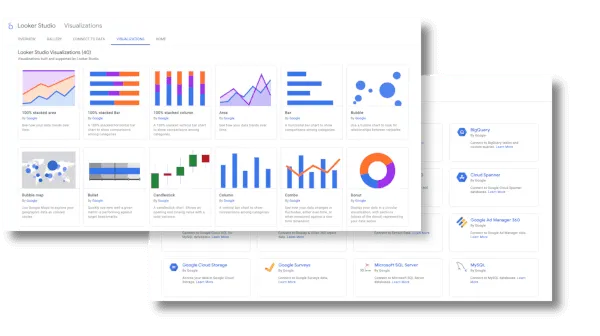
Build a Looker Studio dashboard (now called Data Studio)
Google renamed Looker Studio to Data Studio in April 2026, according to its release notes, so if you’re used to the old name, it’s the same free tool.
Google’s free connectors pull in Google Analytics, Google Ads and Google Sheets. For CallRail, your profiles and map grids, use a partner connector, which may cost money, or paste the numbers into a Google Sheet once a month. Export new customers by source from your CRM into the same sheet.
I’d keep it to four pages:
- A summary of calls, forms, new customers and cost per customer by source, against last month and last year
- Each Business Profile’s calls, website clicks and directions, plus the latest map grid
- The website, with organic clicks and top pages from Search Console and key events from GA4
- Spend, leads and cost per customer for Google Ads and Local Services Ads
If your Local Services Ads account moves into Google Ads, download its reports first, because historical performance reports don’t carry over. I cover that switch in Google Ads for pest control.
What to ask any agency to show you
Chad Louk, who built Prodigy Pest Solutions to 8 figures, put it bluntly on my show.
“If you’re hiring out a company to do SEO and you don’t understand how any of that works, you’re going to get taken advantage of 100%.”
You don’t have to know how to do the work yourself to ask the right questions. Before you sign with anyone, mine included, ask:
- Who owns the CallRail account, the numbers, GA4, Google Ads and the Business Profile?
- Can you show me calls and forms by source, and how many were real leads?
- Do you count current customers, spam and hang-ups as leads?
- How many of those leads became customers, and what did each one cost?
- Can I see map grids across all my towns, not one ranking for one keyword?
The customer questions need your CRM numbers, so plan on sharing a monthly export.
Whoever does your pest control SEO, those answers should come easily. If you’d like a second opinion on the report you get now, book a call and bring it.
Questions pest control owners ask
Will a tracking number hurt my local rankings?
Set up the common way, it shouldn’t. That means the tracking number as the profile’s primary phone, your main line as the additional phone, and the main line everywhere else. The trouble comes from tracking numbers scattered through your directory listings and your site’s schema.
Can I track Local Services Ads calls in CallRail?
Yes. CallRail’s Local Services Ads guide has you replace the business number in your LSA account with a dedicated CallRail number, and warns it may take a re-verification with Google. If your account has moved into Google Ads, check which number leads go to afterward.
Is GA4 enough without call tracking?
No. GA4 can count taps on your phone number, but it never sees calls from your Business Profile, Local Services Ads, a door hanger or a truck. It also can’t tell a new customer from a current one.
How long before the numbers mean anything?
Give a new channel about three months before you judge its cost per customer, and once you have a year of data, compare each month with the same month the year before.
Want more calls from Google?
Book a 30-minute discovery call with Dan to see if we’re a fit.