Pest Control Legends / Episode 38
Kyle Turner on Building Pro Active Pest Control to 140 Employees Without Door Knocking
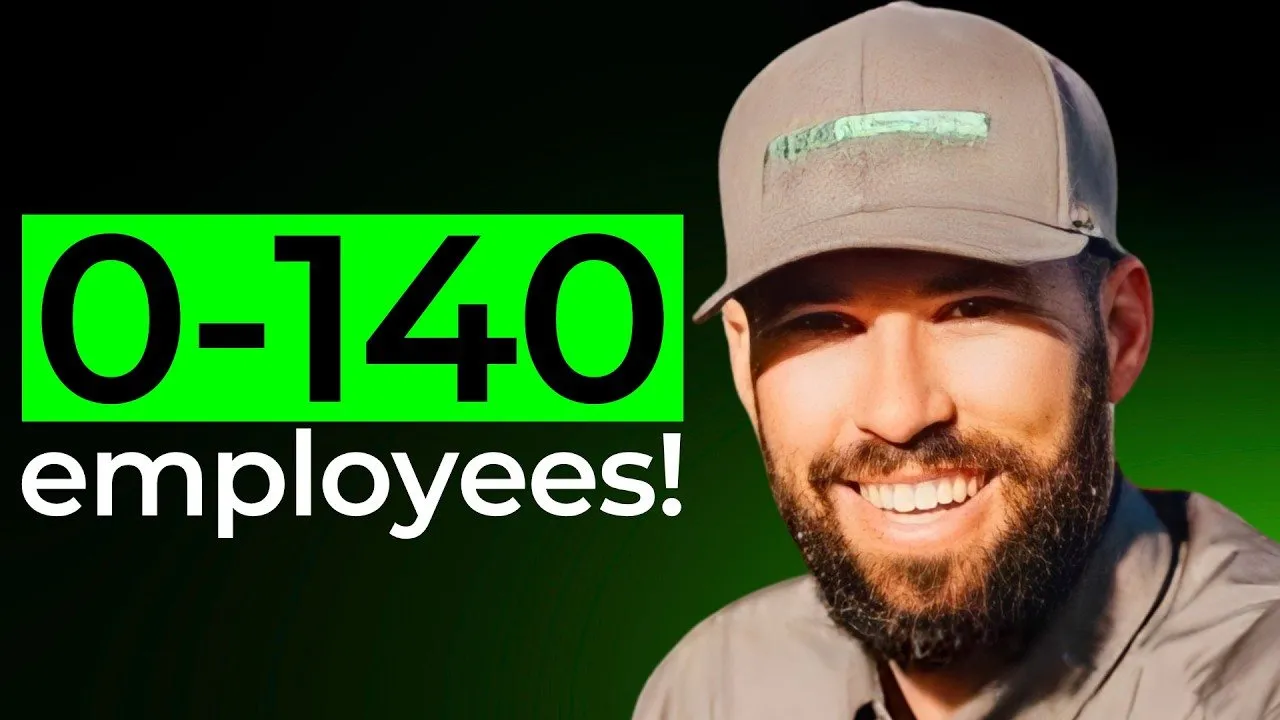

Written by Dan Leibrandt, host of Pest Control Legends and founder of Pest Control SEO
In his first 6 months running Pro Active Pest Control, Kyle Turner was dealing with a few lawsuits, didn’t have many customers and was thinking about selling them to his old employer so he could get his job back. Then one day, with the weather heating up, he sold and serviced about 10 accounts on a single street. He bought lemonade from a little girl out front, her family signed up, then the neighbor, and it snowballed.
Twelve years later, Pro Active has more than 140 employees and over 30,000 customers in California and Arizona. Kyle only knocked doors for those first 6 months. After that, the calls came from Yelp, Google and his reviews, so that’s where I started our conversation. Most of the rest was about his people.
Who is Kyle Turner?
Kyle Turner founded Pro Active Pest Control in Roseville, California, and runs it as CEO. He grew up doing landscaping for his dad and always figured his own business would be a landscaping company. His cousin was a technician and a buddy had started a pest control company, but Kyle pooh-poohed the industry until he saw the opportunity in it.
He took a pay cut to become a tech. When he asked that buddy for a job, with no experience, he was told to get his California license first. Kyle passed the test and called back, and his buddy seemed surprised he’d actually done it. After a couple of years in the field, Kyle started Pro Active in 2014.
Yelp is a game you can learn
Kyle told Allan Draper about his Yelp start on the Bug Bux Podcast, so I asked him to go further. More than 10 years ago, Yelp had little competition and no ads, and Pro Active popped up everywhere for free. Today you’ll scroll past 10 paid listings before you see anyone who isn’t paying.
Yelp is still Pro Active’s second biggest lead source, behind Google, which surprised me. When I asked about Yelp in our Facebook group about a month earlier, almost everyone called it the absolute worst. Kyle pointed out that Yelp started in San Francisco, so a lot of people in Northern California use it. He didn’t exactly defend it, though.
“Yelp does suck. Well, it’s interesting. It’s a game and you got to figure it out. And most people hate Yelp because they don’t understand it.”
You need a really good reputation and a five-star rating first, he said, or no amount of ad spend will work. Yelp also filters reviews. It can tell when you’re asking for them, and it drops reviews that look fake or too cheesy, or that come from an account someone opened just to leave one. That makes it hard to manipulate, which Kyle thinks is why so many owners hate it.
Speed wins a shared lead
About 70% of Pro Active’s Yelp leads are paid and 30% are free. A lot of them arrive as messages that go to Pro Active and 4 other companies at once, HomeAdvisor style.
To beat the other 4, Kyle said, be the hungriest, and that mostly comes down to speed. Reply as quickly as possible and give the lead something tangible to think about, whether that’s a price, a spot on the schedule or a solution. PCM’s guide to working paid directory leads makes the case that those sales are won or lost in the first 10 minutes.
Google is a way bigger source now, and Kyle keeps that side simple, with Local Service Ads and Google Business Profiles that really pop off. Since those first months, Pro Active has knocked doors for just one summer, about 5 years ago, when a team went out to kick off the Arizona office.
Growth is how he recruits
I asked Kyle where he got stuck. Not to toot his own horn, he said, but they never did. In his circle, owners usually can’t get past one technician, somewhere around $500K by his guess. For Kyle, hiring the right people early was crucial, starting with the first employee, and most of his early hires are still with him. Jonas Olson walks through that wall and the ones after it in his episode on the 4 revenue levels.
Pro Active keeps its foot on the gas without door-to-door, because once you lose momentum, it’s harder to hire and stay motivated. It grows every year, and that growth creates the opportunities A players look for.
“My product, the pest control, that’s not me, it’s my employees.”
Pro Active trains its own people and promotes from within. If Kyle were a tech busting his butt for a promotion and watched it go to an outsider, he’d lose motivation. He hires on attitude rather than the resume, because skills can be developed, and A players are magnetic and very positive. To keep them, he offers visible growth, a vision to buy into, good pay, incentives and recognition. “All simple things,” he said.
Everyone gets a shot at Cabo
A top performers trip is usually just for the sales team, especially at door-to-door companies. Two years ago, Kyle started one anyone at Pro Active can earn, with each team’s manager picking a top performer over 9 months.
There were about 30 people on the most recent trip, by Kyle’s count, and each winner got to bring a significant other. They spent 2 nights at an all-inclusive resort in Cabo, with a dinner and a day on a big rented yacht. Every technician team had a winner, and so did customer service, sales and management. It’s very expensive, Kyle admits, but a drop in the bucket for a profitable company, and winners bring that energy back to their teams.
There’s also a company event every quarter, with a spring kickoff at Topgolf in April, a family picnic in September and a dressed-up Christmas party in December.
Kyle never learned any of this at a big company. The biggest one he’s ever worked for is his own, and every job before it had 5 or 10 people. He just asks what he’d want as an employee. If he’d enjoy a Christmas party, other people probably would too. Everybody wants to be part of something, he said, which is what Howard Partridge, who I interviewed about a year earlier, calls a longing for belonging.
Termite work can wait
Kyle doesn’t remember exactly when Pro Active passed $1M, maybe year 2 or 3. After that, he kept expanding territory from the inside out, and without that, he told me, they would have plateaued. If you’re growing the same way, I wrote about building local SEO outside your core location.
For its first 5 or 6 years, Pro Active only sold recurring service plans. Once it had a really good base, it added termite work, rodent proofing and bird work. Kyle would tell small owners to wait too. A day on a termite job might pay well, but it’s a day you didn’t add customers who would pay you every month for the next 5, 10, 20 or 30 years. Offer them, he says, but don’t let them pull you away from building the base.
Pro Active is about 90% residential. When you’re paying a lot for ads, aim them where customers are likelier to stick, refer and pay their bill. Kyle’s ideal customer is a new homeowner who just moved in.
A backup for every seat
Kyle got out of the day-to-day by hiring good people and planning for the worst case, with a backup for every role so one resignation never puts him back in that seat. He trained the first wave of hires himself, on the idea that if you train one person really well, they can train the next.
Today he meets weekly with 3 direct reports: his director of operations, his HR and payroll manager, and accounting with his CPA. He’s a big advocate of the book Profit First and puts a good profit margin around 20%. Below 15% is too low and above 25% is a little too high. Jonas sets the bar a little differently in his profit margin breakdown.
Call your own office
Every day, Kyle looks at where sales are coming from, closing percentages and how the ads are doing. Most days he also calls his own office, both as a current customer and as a new lead.
I don’t know many owners of large companies who do that. He’s done it for years and actually enjoys it, since he often ends up chatting with a CSR about the calls she’s getting, though he isn’t sure his team enjoys it as much. The only other owner he’s heard of doing something similar is Luke Lewis of Native Pest Management, who mentioned it on a podcast. If you want to give customers a good experience, Kyle says, you have to go through it yourself, and a phone nobody answers is a bad one.
He gives his managers the field version.
“Go on a ride along with a technician. I guarantee you by the end you’ll have more than a dozen things to look at, talk about, or think about.”
Pride will kill everything
Kyle never thought he’d run a company this size, and he’s had to learn to set his pride aside.
“The worst thing you could do is be a prideful person, and ‘it’s my idea’ or this or whatever. Pride will kill everything.”
I told him I wasn’t sure I’d heard “setting your pride aside” before, and it reminded me of the 20 minutes or so Preston Peterson and I spent on why it can’t be about you.
Kyle added that you can’t be an emotional wreck, either. When something bad happens, like a lawsuit, put on a brave face so your team keeps believing in you.
To wrap up, he told owners to be profitable and figure out what they want, since a big company isn’t for everybody. If you’re starting out, he’d skip partners. Pro Active has none, and he thinks most people take one on because they’re scared.
My take
Kyle’s two best lead sources reward the same habits. Yelp wants a five-star reputation built on real reviews and a quick reply to every message. Google’s Local Service Ads and Google Business Profiles lean on reviews and responsiveness too, and that’s most of what my team works on with pest control owners. None of it depends on how many doors you can knock.
I’d add one step before his secret-shopper call. Pull up your company on your phone the way a new homeowner in one of your towns would. Read your newest reviews, check the hours on your listing, then dial the number Google shows you. By the time someone at your office says hello, you’ve seen everything a new lead sees first.
A lot of how Kyle runs Pro Active comes from asking what he’d want in the other person’s shoes. Calling in as a lead is the same habit, pointed at customers instead of employees.
Where to find Kyle
Instagram is the best place to find Kyle, on his own account or Pro Active’s, and he’s on Facebook too. If you want a job, he calls Pro Active the best place to work, with a spot on the top performers trip if you do well.
- Website: Pro Active Pest Control
- Careers: Jobs at Pro Active
- Instagram: @turnerkyle12
- Company Instagram: @beproactivepestcontrol
- Facebook: Kyle Turner
- LinkedIn: Kyle Turner
Read the full transcriptHide the transcript
Full transcript
00:00 Intro
00:00 Dan Leibrandt
Hey everyone and welcome back to Pest Control Legends. I'm your host, Dan Leibrandt, and today I'm with Kyle Turner, the founder and CEO of Pro Active Pest Control out of Roseville, California. Kyle launched Pro Active in 2014, and over the last decade, he's grown it into a multi-location operation with more than 140 employees serving over 30,000 customers. This episode, we're going to talk about how he scaled from a startup to a multi-location company, the marketing channels that actually drove his growth. And how he built the leadership team that let him step out of the day to day. Now, without further ado, Kyle, welcome to the show.
00:36 Kyle Turner
Thank you. Thank you. That was a good intro. Thanks, Dan. Appreciate that.
00:40 Dan Leibrandt
Of course, man. Good to have you here. So, Kyle, I want to jump back to the beginning. How did you initially get into pest control?
00:50 From Landscaping to Getting Licensed Before He Had a Job
00:50 Kyle Turner
Yeah, so I initially got into pest control. I mean I think like most people you d I wasn't playing on getting into it, but I used to do landscaping. So I grew up working for my dad, landscaping, just blue collar work. And I always wanted to have my own business. I thought it was gonna be a landscaping company where we, you know, we did backyard installs. But yeah, stumbled into pest control. I think, you know, I had a my cousin was a technician and then I had another buddy that started a company. And so it was all around me. And I was like I always poo-pooed it's just like it's not for me. But I think finally, finally one day I think I realized, you know, the opportunity in pest control and with talking with other people and it's just a great industry, whether you're a technician. A salesman working in the office. I think it's an amazing industry wherever you're at, whether you're owner or a technician. And so I decided I wanted to get into pest control and start my own company and I honestly didn't know anything about pest control. And I got a job as a technician. I actually took a little bit of a pay cut. And I remember my buddy that had a company in my area. He just he had started he'd been in business for a couple of years and I called him up asking for a job and so he said I didn't have any experience in it. So he said, Yeah, go get he's Yeah, go get license, go get your license to spray 'cause I'm in California. And then call me and then I'll hire you. Which is kind of not a not a normal way to go about things, you know, because I'd had no idea what I was doing. So well that's what I did. I didn't know anything and I did all my research and got license and took the test and I called him up and said I got license and I think he was actually kinda surprised that I actually did it. And then he gave me a job and off to the races from there. I was a technician for a couple of years and then I started Pro Active Pest Control in two thousand fourteen.
03:11 The Brutal First Six Months and the One Street That Changed Everything
03:11 Dan Leibrandt
Hm. Awesome. Now talk to me about the first few years. What was that like?
03:18 Kyle Turner
First few years, well, I would say the first six months were very brutal. Very brutal. First six months, you know, definitely second guessing myself, doubting, you know, everything. And you know, definitely had I had a few lawsuits within the six first six months, you know, and I was it was it was brutal. I was ready to give up. And I was like thinking like, man. How can I like a few cust I didn't have that many customers and I was thinking how I could sell these customers to my old employer, get my job back. That's literally what I was thinking. And then finally just it was literally a one day, just the momentum caught, and I think I was out just knocking some doors and I think one day I sold 10 accounts and sold and serviced them just on one street and boom, it was like from that day forward it just took off. But before that it was it was rough and all it took was yeah, one day for the momentum to really turn and for me to realize that there's a lot of potential here.
04:28 Dan Leibrandt
Hm. So what was it about that one day did you just get lucky?
04:33 Kyle Turner
Dude, I don't know, man. I th well, I think it's combination of luck, seizing the opportunity and hard work. You know, I think I was in the right neighborhood. It was getting hot and ran to the ran into the right people. I think there was a little girl like selling lemonade out front of her the house. And so, you know, I bought some lemonade and you know, and then they signed up for service and the neighbor and then just kinda snowballed from there. So definitely a combination of things I think contributed to that day.
05:06 How Yelp Built Pro Active Before There Were Ads
05:06 Dan Leibrandt
Gotcha. So you're doing door knocking. Now, what else was working? I know you talked about Yelp on the Bug Bux podcast.
05:14 Kyle Turner
Yeah. That's really where we got our start. Our a lot of our momentum is from Yelp, and just online presence and reviews in general. Because I only door knocked for like, you know, the first six months and then after that we started getting a lot of calls online from Yelp, Google, and just our online presence started to grow. But yeah, Yelp was really good for us. You know, this was again, you know. 10 plus years ago. And so back then there wasn't any, there wasn't much competition on Yelp. There weren't any ads. And so anytime you search for pest control, you know, boom, we were popping up everywhere for free. And so, fast forward now, you search pest control and you're gonna have 10 paid ads, listings, before you get you see anybody that's not paying anything. So, much harder way to get customers now and you get specific pay to play but yeah, ten years ago, there weren't any ads and we took advantage of that. We got a lot of business for free.
06:26 Dan Leibrandt
Hm, yeah.
06:28 Why Yelp Is Still His Second Biggest Lead Source
06:28 Dan Leibrandt
Yeah. Do you guys still get leads from Yelp?
06:31 Kyle Turner
Yeah. It's our second biggest lead source besides Google. So we definitely get a lot of ads. And I'm in Northern California, so Yelp started in San Francisco, so a lot of people around here use Yelp.
06:34 Dan Leibrandt
Really?
06:44 Dan Leibrandt
Okay. Dang. Because I've talked to a good amount of owners on this and I even posted it at posted about it in the Facebook group maybe a month ago or so ago. And I asked, do you guys use Yelp? Do you like it? And almost everyone said Yelp is the absolute worst. Do not spend your money there. I have tons of nightmare stories. So you disagree with that, I assume.
07:08 Kyle Turner
Yelp does suck. It what's it's interesting. You gotta it's a game and you gotta figure it out. And most people hate Yelp because they don't understand it. And again, you know, Google's a way bigger lead source for us now. The things have definitely shifted, but we still get a lot of leads from Yelp and but we st we have to pay. We're paying we pay a lot of money to advertise on Yelp, and so we have a good reputation. So number one, have to have a really good reputation. Otherwise, then people it's not gonna work with no matter how much you advertise. And then number two, you know, you know, with with Yelp, I mean you gotta be you gotta have a good reputation. You gotta get a five star rating. But most people hate it because they filter the reviews. And so Yelp knows if you're asking for reviews. They know if you're if a review is too fake or too cheesy, they're gonna filter it out. So because Yelp is looking for authentic reviews. Otherwise, if they don't think it's authentic and somebody just opened up an account on Yelp and then left a review, they're gonna probably filter that out because it looks suspicious or fake. So it's hard to it's hard to manipulate Yelp, and that's why a lot of people don't like it, I think.
08:33 Dan Leibrandt
Yeah. Yeah. Okay. So you're saying it's mainly reputation driven, which would be mainly about reviews. And to be clear here, because Yelp being your second largest lead source is a pretty big deal. Is that free or paid or like is it mostly free or mostly paid?
08:52 Kyle Turner
I would say seventy percent of those leads are paid from Yelp. The other thirty percent are free. So it's definitely a pay to play now. A lot of the leads come through messages and so those are those kinda are tough because you're competing automatically against four of the companies. Kind of like a HomeAdvisor style, which is tough. But if you could figure it out, it's defin definitely a good source.
09:23 Dan Leibrandt
Yeah. So last question on Yelp. If it's you against these four other companies, how how do you compete with them?
09:31 Kyle Turner
Tough. It's tough. Who is it's whoever's the hungriest. Really it's about speed. So it's about getting responding to that message as quick as possible. And getting that customer, that lead something, some tangible thing that they can think about, or whether it's price, scheduling, or whatever it is, solution. But really it's speed.
09:57 Dan Leibrandt
Gotcha. Cool. And then you said Google's number one. What are you doing there?
10:03 Google LSA and GMB, and Why Door Knocking Stopped
10:03 Kyle Turner
Google. We do a lot of local service ads. Our Google My Business listings really pop off and so yeah, local service ads and Google My Business. That's mainly where we focus.
10:20 Dan Leibrandt
Okay. Kinda just the classic stuff. And are you still doing door to door?
10:26 Kyle Turner
No, door door to door is like that was the first six months of our existence. We did it briefly to start we have an Arizona office. And so we had a team go out there for a summer. This is like five years ago to kick it off. But yeah, we don't do any door to door.
10:46 Dan Leibrandt
Okay, gotcha. Now another question I want to ask you, and I feel like different owners give me I don't know, slightly different answers on this. I'm curious where you land on this because you've gone through many of the stages of business. I want to ask, like, where in your journey and potentially where you see in other people's journeys, do you see people get stuck and do you see the plateaus? Like, do you see people get stuck at like a million where specifically did you get stuck in growing the business across the different phases of growth?
11:23 Why Most Owners Get Stuck at One Technician and Kyle Never Did
11:23 Kyle Turner
Yeah, great question. Not to toot my own horn, but I don't think I got we never got stuck. We have we're never still I don't think we'll ever get stuck. But it seems like people get stuck at the I don't even know if it's the one million mark, but I mean just from people I see, you know, in my circle, it's usually, you know, the one they can't get past one technician or something like that. Usually yeah, it's usually they can't get past one technician.
11:30 Dan Leibrandt
Dang.
11:54 Kyle Turner
And so yeah, I don't know why that is. But for for me, it's just I always looked at everything as, you know, big picture. You know, early on, hiring is crucial, you know. If you gotta you gotta hire the like everybody that I hired early on is you know, most of them are still with me. And so, you know, you gotta pick the right people early on, and that that starts with the first employee. And yeah, so that's usually where I see most people get stuck 'cause usually that first technician, which I don't know, what is that, five hundred thousand or whatever?
12:33 Dan Leibrandt
Yeah, yeah. That is fascinating that that you haven't gotten stuck though. Wha why do you think that is? Is it like your mindset or the way you approach things? Hey guys, Dan Leibrandt here. Real quick, if you're a pest control owner looking to grow, I have two amazing resources for you. Number one is our free Pest Control Millionaires Facebook group. We have over 4,000 owners just like you in our community and would love for you to be a part of it. Go search Pest Control Millionaires on Facebook and request to join the group now. Number two is our book, Zip Code Kings. This was authored by me, Jonas Olson, and Jake Sheldon to be the ultimate guide to pest control marketing. We discuss everything from branding and traditional marketing to local SEO and Facebook ads. Go to Amazon and search Zip Code Kings to get your copy today. Now that being said, let's get back to the show.
13:22 Kyle Turner
Yeah, I think I'm very optimistic about everything and I always look at the bright side and you know, I'm always try stay really positive. And I, you know, we always set big goals. And so, you know, we just always push forward and at the end of the day, if you don't sell anything, then there's nothing to do. So, you know, we have a huge sales mindset, even though we don't do door to door, it's always foot on the gas and it's always momentum. I think momentum drives everything. And as soon as you lose momentum, you know, you it's harder to hire. It's harder to stay motivated. And once you lose momentum to get that ball rolling again, it's a lot harder. But you know, the reason why you're able to attract really good talent and hire really good people is because we grow a lot. We grow every year. And with a lot of growth comes a lot of opportunity for people. And so I think myself and everybody around me, that everyone's looking for opportunities. So if you were looking for A players, really good employees, you gotta be a company that's growing at a rapid pace and that's gonna create opportunity for others to come join you.
14:39 A Players, Hiring on Attitude, and Promoting From Within
14:39 Dan Leibrandt
Hmm, definitely. Yeah, talk to me more about that. F first off, what is the importance of A players?
14:47 Kyle Turner
Well, the my product, the pest control is it's not me, it's my employees. So it's our technicians, customer service team, our sales team. So they're the face of your company. Everybody that works at Pro Active Pest Control, we hire, we train, and we promote from within. So I'm a huge advocate of fostering A players. And seeing the potential and promoting our employees from within versus what you know, a lot of companies do is they need a management position fulfilled or something fulfilled and they and they end up hiring somewhere else, some other company and have some random person come in and take that spot. And I run everything based on how I would feel or look at things. And so if I was a technician or an employee working at a company and I'm busting my butt every day and I'm aspiring to move up the ranks or get promoted and the company I works for work works for the company I work for hires somebody else to come in from somewhere else to take a position that I would potentially want, then I would lose motivation and yeah, I'd be I would be frustrated as an employee or as a technician. So we always try to get everybody the opportunity, at Pro Active Pest Control to promote, grow within and we give all the tools they need to be successful and to take those opportunities.
16:31 Dan Leibrandt
Gotcha. So that's the importance of A players. Now, how do you recognize an A player? Like, is there any key traits where you're just like, this guy is totally an A player?
16:44 Kyle Turner
Yeah, starts with attitude. I think you know you hire on the attitude in the person, not the skills of the resume, really. I mean those can be developed and cultivated, but A players have a great attitude, they're they're magnetic, they're very positive. So that that's what we look for. That's what I look for. Great attitude.
17:07 Dan Leibrandt
Awesome. Okay. Yeah, I've heard that a lot from high level owners that you can teach anyone to do the service, but there's maybe something innate about being charismatic and just overall optimistic. Yeah, sweet. And then I also want to ask around A-players. So let's say you hire a great A-player, but it is this person with this great attitude. Well, then how do you keep that person and make sure they stay with your company?
17:37 Kyle Turner
Yeah, I mean, I think it goes back to kind of what I said is yet that there has to be opportunities and growth for them to see. And the way you keep them is you have to get them to buy in. They need to buy into the vision and the potential of the company and what you're building. And so I always take care of my employees and everybody that work for me the way I would want to be taken care of. So that's the way I look at everything. So whether it's our customers, our employees, or any relationship in your life, you know, how would I want to be treated? What would I want as an employee? And so the way you keep A players is a good culture and you create opportunities for them and you pay them well, give them incentives, you treat them well, you recognize them, all simple things. We do a top performers trip that we started two years ago. And so I got the idea because, you know, a lot of companies, they do a top performers trip or a trip for their employees. But usually it's just for the sales team. A lot of door knockers do that. But usually it's just for sales. And so I was like, you know, why don't we do like a top performers trip where everybody in the company has an opportunity to go on that trip? And so we started two years ago and the way we run it is, you know, each team manager, they select their top performer for the year. So we run it over nine months. And so each team's manager, they choose their top performer from their team and that top performer gets to go on the trip. And so we do two nights in Cabo. And one of the days we ran out of big boat, big yacht. We do a dinner and it's an all inclusive resort. And so this last year we went to Le Blanc in Cabo. We got a big boat. And I think there's like 30 of us there. And they each got to bring their significant other. And it was a lot of fun. And everyone talks about that and it spreads out the company. So we had somebody from our customer service team, top performer from our sales team, top performer from each of our technician teams. And so we also had a top performer manager. And so it's a big group. And that's an opportunity that we give to everybody in the company to come on that top performers trip. And so that's one of the ways you can keep A players and get A players by giving them opportunities. And when they do well, rewarding them.
20:34 The Top Performers Trip and Building Culture Every Quarter
20:34 Dan Leibrandt
Dang, that that is so awesome that you guys do that company wide trip. And I know a good amount of bigger companies do that, or maybe even like maybe some tech companies, but to take 30 people that has to be pretty expensive, right?
20:49 Kyle Turner
Yeah, it is it's very expensive. And so we fly all out there and you know to put up in an all inclusive resort. It's a these these are nice resorts too. And rent out the boat. It's definitely expensive, but again, I think if you're a successful, profitable company, it's a drop in the bucket. And you know, these are memories and things that spread throughout the company. And I mean honestly on these trips, like I you know. I have a lot of fun on these trips and I look forward to them personally. So it's definitely an investment, but I think in the grand scheme of things it's s a small investment.
21:32 Dan Leibrandt
Yeah. It does seem like a key culture builder because maybe people are hanging out in the office together or whatever. But when you instead are outside of business and instead just having a good time with people and really connecting with people, I think maybe correct me if I'm wrong, but some people may even like develop really good relationships and friendships through this.
21:55 Kyle Turner
Yeah, definitely. And when the on the top performance trip, some of these employees haven't met each other, they're in different regions, different areas. And so, to talk about their successes and wins and what's working for them, it's just it's just a really good environment and contagious environment. And then, they everybody brings that back to their teams after the trip. And so, a lot of positivity from it.
22:25 Dan Leibrandt
For sure. So what else do you do outside of that to develop culture across your over a hundred forty employees?
22:34 Kyle Turner
Yeah, we do a lot. Sometimes I think maybe we do too much, but so we do something every quarter. So you know, spring, and April we'll do a spring kickoff company wide. And so we'll do usually we'll go to Topgolf and kind of kick it off for the spring summer, the busy season. So we'll do some awards there. And just, you know, get everybody amped up and excited for the busy season. And then we'll do a summer picnic. Which we usually do. That's actually coming up here in September. So we do a summer picnic where our employees and their families can come and it's kinda winding down the busy season. So that's fun, casual. We'll do a dunk tank and some raffles. So we do that and then and then we do a Christmas dinner, Christmas party. And that's for you know in December and everyone everyone brings their significant other and dress up and we do a nice dinner and a little DJ, some dancing and yeah, it's a lot of fun. So that's what we do. And everyone looks forward to it every year, so it's everyone knows what's coming up.
23:52 Dan Leibrandt
Mm, definitely. Where do you learn how to do all this r regarding culture, marketing? Was it intuitive or were there some key books or mentors?
24:03 Kyle Turner
You know, that's a good question. Again, I think it goes back to well, what I what I would want as an employee. And the biggest company I've ever worked for is my company. So I've never worked at a big company. I've always, you know, just worked for my dad or another landscaper and just small, small companies, like five, ten people maybe. And so, most of the ideas and most of the things that I think about are just things that, hey, it'd be cool to have a Christmas party. It'd be nice to have a company Christmas party, Hey, it'd be cool to do a spring kickoff, hey, it'd be fun to do a summer picnic. So these are honestly all things that I wanna do. And so I figure if I wanna do then other people probably want to do and so that's just how I think about things and it seems to work out well and everyone enjoys it and just figure if I wanna do it, then other people probably wanna do it. So most of this stuff I just do for myself.
25:10 Dan Leibrandt
No, I think it's really understated that way of thinking. It seems like you're constantly putting yourself in your employee shoes. And instead of you know, most people are naturally selfish. They only think about what they want, like as a business owner. How how big can I grow this company? How can I optimize it, make more money? But it seems like you're constantly thinking, like, hey, well, I wanna, you know, keep this A player on my team. What would I want if I was him? And I think that's like I said, understated. I don't think most owners actually do that.
25:48 Kyle Turner
Yeah, I don't know. I just speak for myself, but it's it when you think that way, just things are much simpler. And so it's easy to decide what to do in any situation, It's like what would I want it? What would I want? So and I enjoy doing it and you know, all the all the everyone that works for Pro Active Pest Control that works for me, you know, I think they all deserve an opportunity and a chance and you know we hang out together, even on the weekends sometimes. And so, yeah, I mean, everyone wants to be a part of something, including myself, you know, everybody wants to be part of something. That's why clubs, gangs, whatever, that's why they're all all popular and cool. Cause you know, everyone wants to feel like they're part of something. And so, what better place than where you work to feel like you're part of something, you're growing something? You have people on your team, on your side. And they have your back and you guys can have fun and work hard together.
26:49 Dan Leibrandt
Totally. I interviewed this guy, Howard Partridge, who's pretty well known in home services about a year ago or so. And he had a really good phrase around this that we all have a longing for belonging. That like you said, we naturally and also from an evolution perspective, we want to be a part of a group. And it's kind of the worst thing to be like an outcast, not part of really any group. It feels unsafe, it doesn't feel natural. So when you can develop that with your company and that be the group for your people, that's now people are dependent on your company, but in a good way.
27:30 Kyle Turner
Yeah. Yeah. I agree a hundred percent with that that the philosophy and yeah, I mean where you work is where you spend a lot of your time. So what better place than than when you work to be a part of something and to be happy and enjoy the journey.
27:48 Residential vs. Commercial and the Accounts to Avoid
27:48 Dan Leibrandt
Definitely. Now I also heard you say that you guys are going pretty hard on commercial. What is your split between residential and commercial?
27:58 Kyle Turner
Yeah, so commercial, we're about 90% residential, so we don't do a lot of commercial. We would love to do more commercial. Commercial is just a little bit of a different beast. We have we do have full time commercial technicians that work for Pro Active Pest Control. And so we just try to st we try to we try to be intentional what commercial we do. And so we d we try to do we do a lot of gyms and we try to stay away from restaurants and we do some restaurants, but some apartments. But there's some commercial that is not the best. But we are trying to grow our commercial division a little bit more. Just a little bit of a different beast. I think it's it feels I feel like it's more boots on the ground, more networking versus, you know, the typical residential homeowner who's just picking up the phone calling.
28:58 Dan Leibrandt
Yeah, totally. So going off what you said, what would you say are the worst commercial properties to service?
29:07 Kyle Turner
I mean, run down apartments and bad restaurants that are dirty. I mean, re I mean, yeah, so those are probably two things that come to mind. So you know, if you're doing apartments, you know, probably higher end apartments that aren't, you know, really bad where they're just infested. And, you know, same thing with restaurants. And if you are doing them, you know, gotta make sure you're charging enough to warranty it and take care of the issue. So we've had definitely emergency calls where it's a restaurant got shut down and we'll go out and within an hour or something and fumigated and treat it and but we charge a lot for that, you know, emergency response and so you just have to charge make sure you're charging enough with commercial, especially. And yeah, don't waste your time on the bad accounts.
30:05 Dan Leibrandt
Yeah, definitely. What does that look like in residential then? Like are there certain residential accounts you won't take on?
30:15 Kyle Turner
I we'll take on everything. It's just, what do what do you what are you advertising towards and what are you targeting? What's your I think Tommy Mello's like what's your avatar customer? So, ideally, we love a new homeowner that just moved into a house and they need pest control. And so, you know, there's nobody that we won't do service for, shy away from. But you know, if you're if you're paying a lot of money to advertise, you're gonna advertise in the areas where that that customer's gonna be more lucrative, more sticky, more likely to refer people, more likely to pay their bill. And so, you know, typically a new homeowner or somebody that you know switching from another company to ours or something like that.
31:07 Scaling Past $1M With Territory, Specialty Services, and Arizona
31:07 Dan Leibrandt
Yeah, makes sense. And I wanted to get back to like your journey and timeline. So you've been in business for about twelve years. Well, when did you hit your first million?
31:18 Kyle Turner
That's a good question. Actually I should probably know this. I don't even know. I don't I don't even know. I have no clue, man. Maybe a second year, third year?
31:30 Dan Leibrandt
Okay, gotcha. And then walk me through scaling up from one to five or five and beyond.
31:41 Kyle Turner
One to five technicians. Million. Man, it's big talking big money, man.
31:43 Dan Leibrandt
Up million. Scaling past one million, 'cause I...
31:52 Kyle Turner
So walk you through one to five million, five to ten, et cetera.
31:58 Dan Leibrandt
Yeah, yeah, just because I see a good amount of owners that can get to like you said, that 500k, maybe they can get to even like that seven fifty, one million, but I definitely see some people kind of start to plateau around there. So like how did you push past one million and now where you're at?
32:21 Kyle Turner
Yeah, so we expanded territory. So we just kept growing like from inside out. The only location that we have that it's separate from where we service now is Arizona. We started Arizona office about five years ago. But in order to not plateau, you got to you gotta grow, you expand your territory. You gotta start thinking outside the box, extending hours. Do you gotta look at different advertising avenues? So you just always gotta be thinking big picture and trying to stay ahead of the curve. Because yeah, we would have plateaued if we didn't expand our service area. Maybe if we didn't add more services, you know, in the first five, six years, we didn't do any termite, we didn't do any specialty work, rodent exclusions, bird work. We didn't do any of that. We just focused on the service plans, which which is that's the bread and butter. But once we had a really good base of customers, then we added on termite, the rodent proofing, bird work, you know, a lot of those specialty services that are higher ticket items, but not recurring. So we added on those later. So yeah, it's just really thinking outside the box and expanding territories and looking at new advertising ra avenues and new ways to make money.
33:57 Dan Leibrandt
Yeah. Would you recommend others get into specialty services like you did?
34:03 Kyle Turner
I would. But maybe not right away. Because especially if you're small, you know, if you're if spent all day trying to or doing a termite job or rodent proofing a house and you're ear and it's early on and maybe the money's good, but you know, y that's a day where you didn't have any opportunity or you weren't able to acquire new customers that have a monthly residual income that you'd be benefiting from for the next five, ten, twenty, thirty years. You're just, you know, focusing on that single payout, which is good. But if it's if it's taking you away from acquiring new recurring customers, then may you know how much is that job actually worth? And so I think it's a good it's good to offer that service for your customer and use the company, but just make sure it's not taking away too much from building that base of customers.
35:12 Dan Leibrandt
Yeah, one hundred percent. And then you said you expanded to Arizona. Why'd you do that?
35:18 Kyle Turner
Who knows why? That's a bit you know, I had a technician, I get asked this question a lot. Like, why did you go to Arizona? I had a manager that worked for me here, and he used to live in Arizona and work there, and so he's very familiar. He's like, Yeah, it's you know, it's a great area for pest control when he was there. And then this is during COVID, so...
35:19 Dan Leibrandt
Ha.
35:45 Kyle Turner
Everybody's moving out of California and one of the places they're moving to was Arizona. Arizona's on fire is built. Not litter on fire, but it was there building a lot. And a lot of people are moving there during COVID. And so I was like, you know what? Maybe it's maybe we let's diversify a little bit, you know. It's and so my manager here that used to live in Arizona, he moved out there and started the branch and off to the races. And so that's how we started in Arizona. And it's been good. It's been good. But definitely very competitive market that we've realized.
36:21 Stepping Out of the Day-to-Day With Three Direct Reports
36:21 Dan Leibrandt
For sure. Now I want to understand how you've scaled yourself out of the day to day and what does your day to day look like?
36:37 Kyle Turner
Yeah, so yeah, really it's hiring the right people. So I have three yeah, three direct reports. So my director of operations reports to me. And then my HR payroll manager. I meet with her once a week and she reports to me and then accounting and my CPA. So those are my three direct reports and the way I remove myself from day-to-day operations is hiring good people and creating backups and redundancies. And so you always have to plan for worst case scenario. You know, what if this happens or what if this person quits or what you know, etc. So I had you know, basically everything set up. Everybody there's a backup for everything. So which took a lot of stress and worry from me because then, you don't have to wonder, hey, if there's something if this person quits or if the issue with this person or whatever, am I am I back to square one where I'm back in that position having to take over? But the way I set everything up is, creating backups and me training that first wave of hires from the ground up. And so it's like they say, if you train you train one person really, really well, that's the last person you should need to train, because then they can train the next person, it goes on. And so yeah, it's hiring good people, creating backups, and just creating a plan to remove yourself and it's hard to do, takes a lot of time, you know, just it didn't happen overnight. But you know, if you do it right, it works.
38:35 Dan Leibrandt
Yeah, definitely. And the second half of that was what does your day to day look like? What are you focused on?
38:41 Secret-Shopping His Own Office and Doing Ride-Alongs
38:41 Kyle Turner
My day-to-day. Well, so I'm looking every day I'm looking at our sales numbers. And so I'm just looking at, you know, where where's our sales coming from? How are they looking? What's our closing percentages? You know, how's our average how's our how are our ads doing? And so a lot of time on our sales, our ads, and seeing if we need to tweak anything. So something I look at daily. I mean most days I'll call into the office as a current customer. And then I'll also call into the office as if I'm a lead or a new customer. So a lot of it, you know, is just me look trying to look f at everything from the outside from a bird's eye view and seeing if there's anything that we can tweak and improve on. And you know, looking at our our financials and seeing, you know. Is there anything that we could do better to save money or any area that we can spend more money in as far as equipment product efficiencies? Last week I did a ride-along with one of our technicians. It'd been a while since I did a ride-along. But yeah, I always tell my managers if you're needing something to talk about or train on or you just don't know what to talk about or look at. Go on a ride-along with technician. I guarantee by the end you'll have more than a dozen things to look at, talk about, or think about. So, and so I'm a huge advocate of job job shadowing, and ride alongs because there's a lot of things that you realize or come to life that hey, we could do better, or we could do this, or why are we doing it that way? And yeah, you don't you don't realize those things until you see...
40:35 Dan Leibrandt
Hmm. That's really good insight. It seems like overall what I'm taking from what you just said there is even though you may be like, of course, the higher up in your company and you've purposely removed yourself from the like taking the calls and riding in the truck and all of that, like you should still occasionally put yourself in those positions and make sure that you're not just like enjoying life at the top and hoping things are okay, but occasionally actually get in the trenches and see are we actually answering the calls how we're supposed to? Are are we actually servicing how we're supposed to? I think that's really good. I don't know many owners of large companies that do that.
41:24 Kyle Turner
Yeah, I've been doing it for years and the funny thing is it's really easy and it's actually enjoyable. 'Cause a lot of times I'll call in and I'll talk to one of the CSRs and we'll end up chatting and I'll ask her how she's doing and you know, ask her, you know, what kind of calls she's getting. And so it's actually very enjoyable. So I enjoy it. I don't know if the our the employees enjoy it, but I think the only person I've heard really doing this is Luke Lewis with Native. I think he does something similar. I heard a podcast and he was mentioning that. But yeah, it's going through the customer process. What is the customer hearing, seeing, facing? And so if you if you want to provide a good customer experience, then you yeah, you gotta you gotta experience it and see where you can improve. Cause if you're not answering the phone, that's a bad customer experience.
42:19 Dan Leibrandt
Yeah, definitely. And you also mentioned that you have three daily reports. Why why is it those three and what do each of them entail?
42:34 Kyle Turner
Yeah, they just report to me weekly.
42:37 Dan Leibrandt
Okay, weekly.
42:38 Kyle Turner
Yeah, so yeah, directive operation, yeah, we're usually looking at efficiencies and you know, are we hitting our production goals and then HR payroll manager, you know, that's a pretty quick meeting, you know. Hey, you know, how how we doing on our HR side? Are we compliant? Payroll, you know, how things looking here with raises and et cetera. And then with the financials and accounting, it's you can, all right. Are we making money? Are we are we profitable? So if we're not, or if we're, there's somewhere we need to tweak things, we need to work on that and know that. So I'm a big I'm a big advocate of the book Profit First, which is, you know, it's good to grow and have top line, but you have to be making a money along the way. You have to. And so It's hard to do. And if you can't make money along the way and grow, that means you're maybe you're growing too fast or there's something that you need to tweak. But yeah, those are my three director ports. It's once a week and try to keep it pretty simple.
43:45 What a Good Profit Margin Looks Like
43:45 Dan Leibrandt
Hm. For the people listening, what would you consider as a good profit margin?
43:51 Kyle Turner
I would say good profit margins anywhere from I would say if you're around hovering around the 20% mark. Yeah, give or give or take. Yeah. If you're above 25, that's a little too high. If you know, if you're below 15, that's too low. So, you know, around that 20 mark is I think a good target to shoot for. And then you can still you can still grow a decent amount at that profitability. Mark twenty percent. And if you can't then you probably need to adjust your pricing or efficiency or something.
44:15 Dan Leibrandt
Yeah, I agree.
44:26 Dan Leibrandt
Yeah. I talked to some smaller owners that say they're like, I'm at a 60% profit margin. And it's like it's just it's because it's just them or them and one technician. It's like, okay, well, you should probably invest a little more. Yeah. Yeah.
44:36 Kyle Turner
That's yeah, that's different. Yeah. Yeah.
44:43 Setting Your Pride Aside
44:43 Dan Leibrandt
And I also want to ask you before we wrap up, across the 12 years of growing this company, how have you had to develop personally?
44:55 Kyle Turner
Yeah, good question. Personally, definitely had to I mean, I never I never ever thought I'd be running a company my size. Never. So I've definitely had to learn and adapt. And you know, you one thing yeah, I've realized as you know, manager and owner is you have to you have to set your your pride aside. You know, the worst thing you could do is be a prideful person and you know, it's my idea or this or whatever, and that, you know, pride. Will kill everything. So, you know, setting your pride aside. You know, you can't you can't be a mo you can't be an emotional wreck. There, you know, there could be the worst thing happening at the company or whatever, a lawsuit or et cetera, which is has happened, and you gotta put a brave face on and have a good attitude and you know. Make sure everyone's confident and is believing in you and the company. And so, you have to you have to hold it together and bad things happen and you get through and they passed and it's done. It's done. So but controlling your emotions, setting your pride aside, you know, and just always trying to stay ahead of the curve, always trying to learn new things. You know, everyone at my company here at Pro Active, they everyone knows I'm not afraid to make Tweaks, changes, whatever it is. Software, or hey, we're gonna try this out. We're not afraid to try things out. And if it doesn't work, it doesn't work. If it does work, great. I'm glad we tried it. But you have to try new things and you know just have to be innovative and try to stay ahead of the curve. So yeah, those are the some of the things I've done to help keep up with the company and probably still not there. There's probably a lot of lot more I can learn.
46:57 Dan Leibrandt
Yeah. No, that that was great. And I love that phrase, which I don't know if I've heard before, but setting your pride aside. I think that's so key. And I've heard that from some of the top owners. Like I talked to I believe, yeah, it was Preston Peterson. You probably know him.
47:14 Kyle Turner
Yeah. Yeah, good guy.
47:16 Dan Leibrandt
He I mean we'd interviewed him, I don't know, a few months ago and we'd probably talk for like 20 minutes about this of like you need to it can't be about you. You need to set your pride aside. You need to set your emotions aside. Like what's best for the company? And just think that way.
47:33 Kyle Turner
Yeah. Yeah, he's he's absolutely right. And it's to it's easier said than done. It's tough to do, but you have to do it.
47:42 Kyle's Message to Pest Control Owners
47:42 Dan Leibrandt
Yeah, for sure. Well, cool, Kyle. We'll start to wrap up the show here. I've got one final question that I ask all my guests, which kind of ties into the answer you just gave here, which is what is your message for the pest control owners out there? What do you want to tell them? What do you think they need to know?
48:01 Kyle Turner
What is the message? I would say it's enjoy the journey. Make sure you're you're profitable, make sure you're making money. And figure you know, figure out what you want, you know. Having a big company is not for everybody. You know, you can be very successful, make a lot of money being small as well. But yeah, I mean, and just enjoy the journey, you know, and know yourself and know what you want. And yeah, I think that's the best advice I could give. And if they want to grow it to into a big company, do that. But I will say this, if you're looking to start a company, you know, my recommendation is don't take on partners. I don't have any partners in Pro Active Pest Control and believe in yourself and you know, most people take on partners 'cause they're scared and with and it is scary, but if you can do it without taking on a partner, I would hundred percent do that.
49:02 Where to Find Kyle
49:02 Dan Leibrandt
Amen. Well, thank you so much for coming on the show, Kyle. This has been great. Where can people find you and connect with you online?
49:10 Kyle Turner
Yeah, I'm on Instagram. You can check out my personal Instagram or our our company Instagram @beproactivepestcontrol. And then my Instagram Kyle Turner or Turner Kyle one two, something like that, you'll find me. But I think I'm on Facebook too. So yeah, follow me, add me, and love to connect with anybody.
49:32 Dan Leibrandt
Awesome. So those links will be in the description and anything else you'd like to plug or promote.
49:38 Kyle Turner
No, that's it. If you wanna work for Pro Active Pest Control, we're the best place to work for. So hit us up and we got a spot on the top performers trip if you do well.
49:48 Dan Leibrandt
Sweet. Well, thanks so much for coming on the show again, Kyle. This has been great and hope we stay in touch.
49:53 Kyle Turner
Cool. Thanks, Dan. Appreciate it.
49:55 Dan Leibrandt
Course. YouTube has this crazy feature where its algorithm knows the perfect next episode you should watch. So click right here and watch it now. Just click it. Click, click, click.
THE PEST CONTROL LEGENDS EMAIL
One lesson from the top operators in pest control, every Wednesday
When a new episode of Pest Control Legends comes out, I send you the one thing from it worth using in your business. One short email.

Want more calls from Google?
Book a 30-minute discovery call with Dan to see if we’re a fit.