Blog / Marketing
Pest Control Social Media: What to Post, Where to Post It and What to Expect

Pest control social media rarely makes the phone ring the way Google does, because people scrolling Facebook or TikTok weren’t looking for an exterminator. What it does well is make your company familiar before someone needs you. Post real jobs, real technicians and your town, starting with Facebook, and post every week.
I run an SEO agency, so I’m biased toward Google. I also host a podcast, and some of the people I’ve interviewed built big followings in pest control. This post is what I’d tell an owner who wants social media to earn its time.
What social media does for a pest control company
Most people buy pest control after they have a problem. When there are ants on the counter, they search Google, and the companies in the map pack and the ads get the call. Social reaches people before that moment, so social media marketing for pest control has to work differently from search.
It does three jobs well. It makes your name familiar, so the homeowner who sees your truck or your yard sign already knows who you are. It gives people somewhere to check you out, and BrightLocal’s 2026 survey found 24% of consumers visit a business’s social media after reading positive reviews. And your profiles, linked and consistent, help Google tie your business together as one company.
It’s weaker at producing calls on its own. Plumber Roger Wakefield once told me he’d drop TikTok if he could, because it doesn’t bring him customers. I look at social media content mainly for what it does for SEO and conversions. Don’t expect huge view counts on most pest control posts. You don’t need them.
If you’re under about $500K a year in revenue, your Google Business Profile and Local Services Ads should get your effort first. Social media is cheap to start, though, and posting a little every week costs you mostly time.
Which platforms matter for pest control
You don’t need to be great everywhere. Claim your name on all the main platforms so nobody else takes it, then spend your time where your customers are.
| Platform | Best for | What works there |
|---|---|---|
| Homeowners in your towns | Short videos, job photos, town groups | |
| Younger homeowners | Reels, before and after, your team | |
| TikTok | Reach, often far outside your area | Bug videos, quick pest ID |
| YouTube | Longer answers people search for | How-to videos, Shorts |
| Nextdoor | Neighbor recommendations | A claimed business page |
| Commercial accounts | Posts about commercial work |
Facebook is where I’d start. In Zip Code Kings, my partner Jonas Olson makes the case that Facebook brings the best local leads, because most of the people engaging with you there live nearby. TikTok and YouTube push videos to people across the country, which builds a name but not always in your zip codes.
TikTok still deserves a look if you’ll show up consistently. Adam Holt, a board-certified entomologist, built his account past 500,000 followers on what he calls gross-out content, like ticks, lice and mites. He also uses TikTok like a search engine. When he moved to San Diego, that’s how he found a sushi place and his chiropractor (Adam’s episode).
Nextdoor works like word of mouth, and I compare its ads with the other paid options in pest control advertising. LinkedIn is for commercial work. Property managers and facility managers are there, and most of my own business opportunities start on LinkedIn.
Pest control social media post ideas
The best pest control social media posts come from your own schedule, because your techs see something worth filming every day. Every question your office answers on the phone could be one, too.
Technician videos
- A 30-second walk-through of what a tech found, like a wasp nest in a soffit, droppings behind a stove or a mud tube on a foundation wall.
- A tech explaining why they treat where they treat, like the eaves for spiders or the gaps around pipes for mice.
- The inside of a service truck, and what each piece of equipment is for.
- An answer to a viral DIY video. Adam wanted to duet one where someone laid down far too much cockroach gel bait, to explain why following the label keeps people safe.
Pest ID and seasonal warnings
- “Termite or flying ant?” side by side, posted when swarmers show up in your area.
- A customer’s bug photo (with their OK), named and explained. Adam’s tip is to turn on the flash and put a coin next to small bugs for scale.
- What to watch for this month, like mosquitoes and wasps in summer or mice moving indoors when it cools off.
- A pest story from the local news, reposted with what it means for your town. Adam’s advice is to start with the season, then watch the news.
Before and after
- An exclusion job, with every gap you sealed.
- A wasp nest before and after removal, or eaves cleared of webs.
- A crawl space or attic cleanup.
Get the customer’s permission, and keep house numbers, faces and street signs out of the shot. With bed bugs, show nothing that could identify the home.
Your team and your town
- A short introduction for each new tech, and milestones for the ones who’ve been around.
- Sponsorships you show up for. Jeremy and Jason Julio bought logo shirts for a kids’ flag football league, and they’d rather go to a game, take a team photo and post it in that town’s community group than wait on a plaque (the Blue Collar Twins’ episode).
- Chamber events, charity work and shout-outs to partner businesses like a lawn care company you trade referrals with.
- A thank-you to a customer who left a great review, if they’re happy to be tagged.
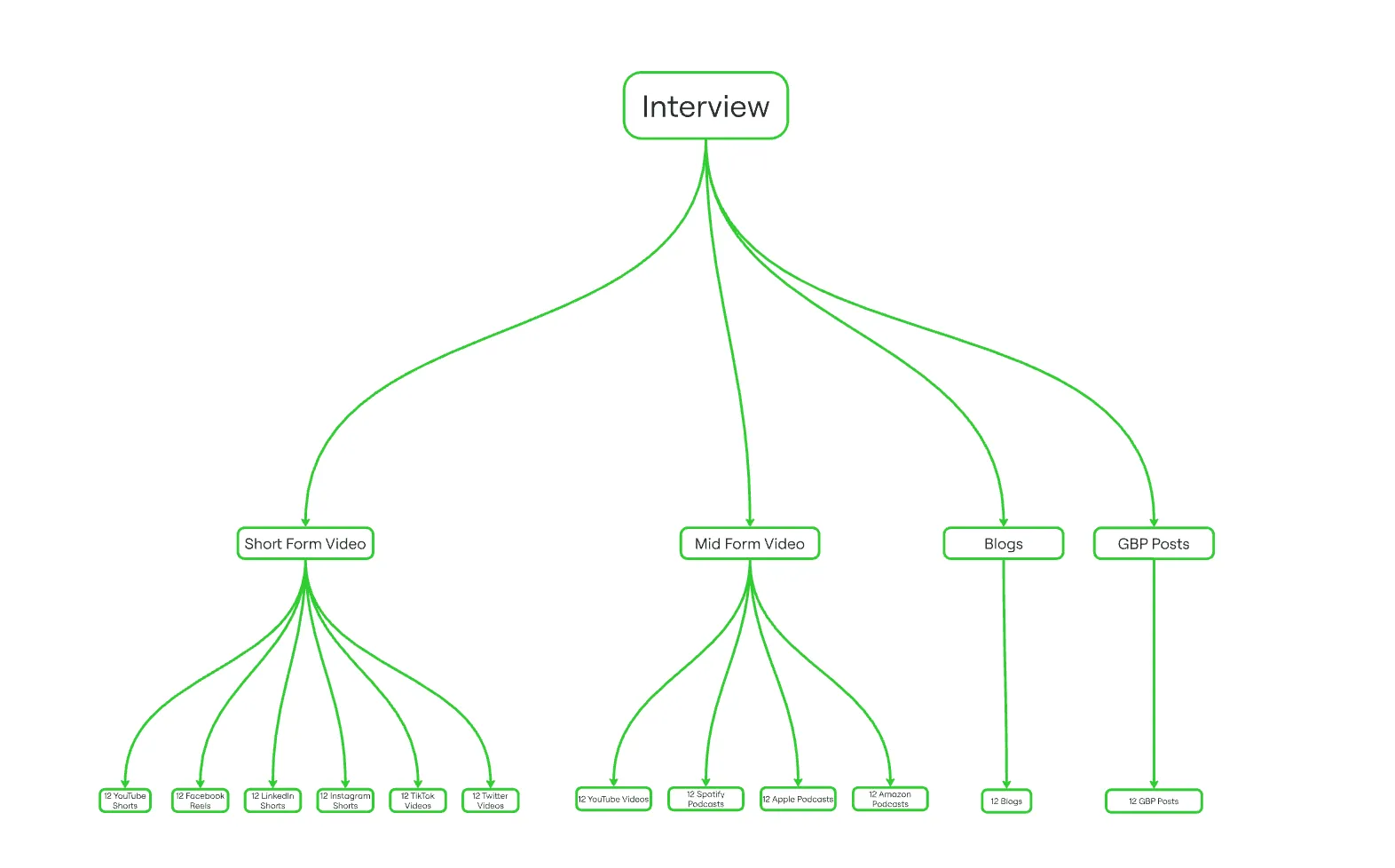
One recorded conversation, like a short interview with you or one of your techs, can become short clips for every platform, a longer video, a blog post and a Business Profile post, as the diagram at the top of this post shows. A tool like Opus Clip can pick out the best moments, but someone still has to trim each clip so it starts strong.
How often to post
Pick a pace you can keep for a year. If you’ve never posted, once a week on your main platform is a real start, and the first batch of videos will take you a lot longer than the later ones. When posting becomes a habit, add more.
Adam posted 3 times a day while he was growing on TikTok, and he calls that the minimum. Most owners won’t do that, and they don’t need to for local customers. Repurposing helps. Around 2022, Adam reposted about 80 of his TikToks to Facebook Reels in 3 days and went from zero to 16,000 followers there in 2 to 3 weeks.
Your Google Business Profile is a separate job. Post there once a week, and treat those posts as a reason to call, with an offer, a review or a before and after. Your best social video can do double duty there too.
Reply to comments and messages quickly. A message asking “do you do mice?” is a lead, so get a phone number and call instead of going back and forth in Messenger for a week.
Who should run it
Early on, the owner should be on camera. People hire people, and a face they recognize from their feed feels like someone they already know.
Your techs are the ones on the jobs, so they should be filming. Adam says any iPhone works. Turn on the flash, tap to focus, and keep a cheap folding tripod in the tech’s bag. A tech who doesn’t want to be on camera can film the job and add a voiceover, which you can turn into captions. Jonas runs a weekly contest for his techs, with swag or a cash bonus for the best footage.
Someone in the office, a virtual assistant or a freelance editor can handle editing, posting and replies. Answering questions in town Facebook groups is worth keeping for yourself, though. The Julio twins shared a post into each town’s community group every week, and when someone asked who people used for mosquito control, one of them replied as the owner. They wanted to be the ones talking to customers.
Whoever runs your accounts, keep them in your company’s name with you as an admin. If a marketer or a nephew leaves, your page shouldn’t leave with them.
Link your social profiles to your Google Business Profile
Your Business Profile can show your social accounts. Google lets you add one link each for Facebook, Instagram, LinkedIn, Pinterest, TikTok, X and YouTube, under Edit profile, then Contact, then Social profiles. Google says some profiles show links automatically, the feature is only available in some regions, and posts about events, deals or offers from linked profiles may appear on the profile in some places.
Use the same business name, logo, description, website and main phone number on every profile, and link each one back to your website. If you have several Business Profiles, a Facebook page for each location can make sense.
Upload your best job photos and videos to the Business Profile itself, too. If you’re filming for social anyway, your profile shouldn’t be the place with five old photos. My Google Business Profile guide covers the rest of the profile, or our Google Business Profile service can take it off your plate.
Use social media for reviews and referrals
Facebook is a review site as much as a social network. In BrightLocal’s 2026 survey, 34% of consumers had written a Facebook review in the past year, second only to Google at 45%. Reply to every review there, and put your Google review link in your bio and a pinned post.
Keep it clean. Google’s review policy bans offering anything in exchange for a review, asking only your happy customers and pressuring people while you’re on site. Never tie a giveaway or a contest to leaving a review, on any platform.
Referrals come from the same habits. Post your referral program, and thank the customers who send people your way when they’re fine being named. Ask happy customers to recommend you on Nextdoor and in town groups. A neighbor saying “we use them” in a community group carries more weight than anything you post about yourself. Follow each group’s rules, and leave the discounts for your ads.
What I see on pest control social profiles
Almost nobody in pest control is crushing it on social media. A company might have a thousand likes on Facebook or post on Instagram once a week, and that’s it. That’s good news if you’re willing to show up every week.
There are exceptions, and they’re worth studying. Tateum O’Hanlon started Summit Pest Control in Guelph, Ontario in May 2025. When he came on Pest Control Success Stories, he told me about 30% of his customers come from social media, and that his organic videos brought his Facebook ad costs way down. In the episode, he explains how he posts educational videos twice a day across five platforms.
Inconsistent business details are one of the most common things I find in SEO audits, and social profiles are often where they hide. Think of a business name that doesn’t match the Business Profile, an old phone number in a bio or an address from before the last move. Those confuse customers, and they hand Google and AI tools conflicting facts. I see Business Profiles with five photos or none, and some photos so blurry they look like they came off an old flip phone, from companies whose techs carry a good camera in their pocket every day.
Where paid social fits
Organic posts and paid ads are different tools. People who see a Facebook ad weren’t searching for pest control, so those leads close at a lower rate than someone who called from Google.
My partner Jake Sheldon ran Facebook ads for 368 pest control clients before he sold his agency, and he calls boosted posts mostly a way to burn money. He starts owners with lead ads targeted by zip code, a strong offer and fast follow-up (Jake on Facebook ads). I compare Facebook with Google, Nextdoor, direct mail and the rest in pest control advertising.
Before you spend on either, make sure you can tell what’s working. Use tracking links (UTM tags) in your bios, give paid campaigns their own phone number and have the office ask every new customer how they heard about you. My guide to pest control call tracking shows the setup.
Questions pest control owners ask
Is TikTok worth it for a pest control company?
If you’ll post consistently, it can build your name. Adam Holt thinks social media makes sense for anybody, as long as you’re ready if a video takes off. Most of TikTok’s reach is outside your service area, though, so don’t judge it on calls from week one.
Does social media help SEO?
Indirectly. Profiles that are linked from your Business Profile and match your details help Google connect your company across the web, and they show up when people search your name. I wouldn’t expect a viral post to move your map rankings. Steady reviews and real city pages still do more for pest control SEO.
Can I use AI to make my posts?
Use it for caption ideas and editing, not for the content itself. People follow a pest control company to see real jobs and real people, and an AI image of a smiling tech gives them nothing to connect with. My post on pest control AI search covers where AI helps and where it backfires.
Should I hire someone to run my social media?
Hire for editing and posting once you’re filming regularly, and keep the filming and the community replies close to you and your techs. We don’t make social media content for clients, but I’m happy to look at yours and give advice through consulting.
Want more calls from Google?
Book a 30-minute discovery call with Dan to see if we’re a fit.