Pest Control Legends / Episode 36
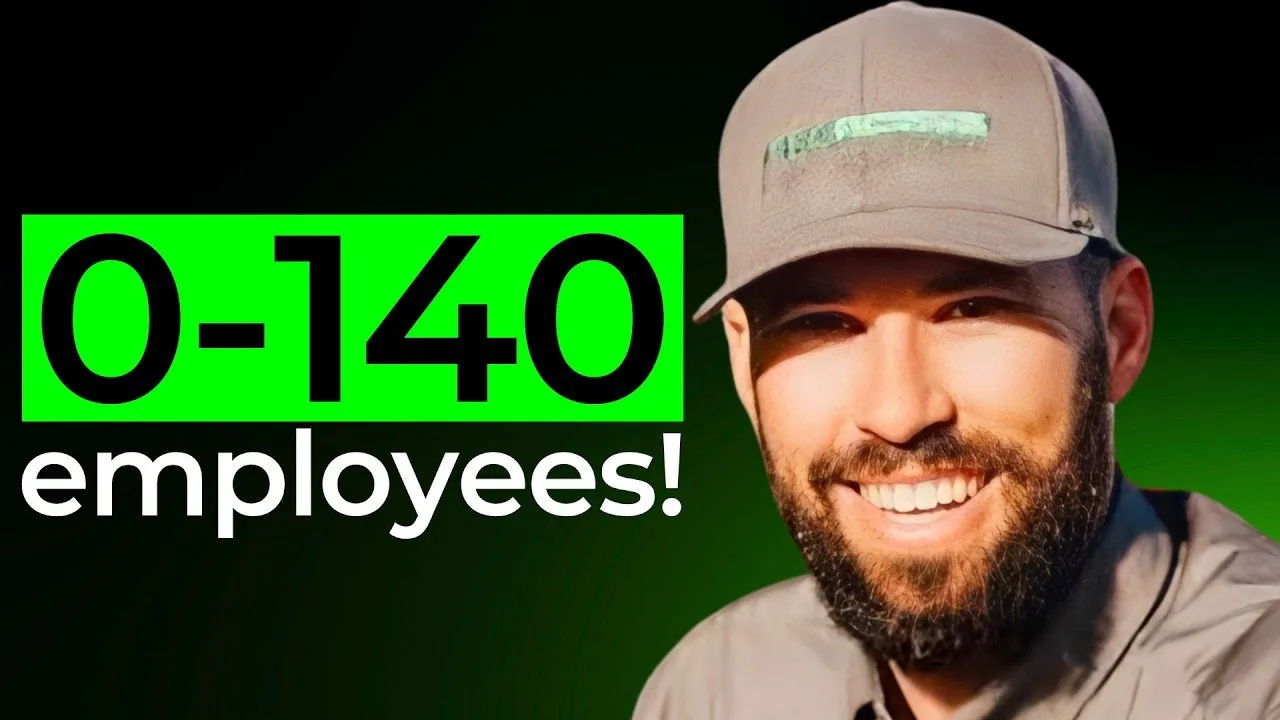
Brandon Sizemore on leaving accounting and building Mint Pest Control to $7M


Written by Dan Leibrandt, host of Pest Control Legends and founder of Pest Control SEO
In college, Brandon Sizemore made fun of people who sold door-to-door and anyone who’d start their own pest control company. After 12 years in accounting, he took all the equity out of his home, got a line of credit and started one. Today Mint Pest Control is a $7M company with 4 locations.
He’d told my partner Jonas Olson the long version of his story on the Pest Control Millionaire podcast, so we spent most of our time on how a CPA sees a pest control business.
When I called him humble, he said most days he fails more than he succeeds, and that Mint has “failed our way to here.”
Who is Brandon Sizemore?
Brandon Sizemore is the owner of Mint Pest Control and a licensed CPA. He sold alarms door-to-door for 3 weeks in college, got his teeth kicked in and went all in on accounting. He audited organizations like the Arizona Cardinals and the Salvation Army, and before Mint he was corporate controller at InfoArmor, an identity theft protection company.
In Arizona, he hired home service companies for the first time. Some never called back or told him when something went wrong, and he wondered if they wanted his business. His accounting days sometimes ran from 7 a.m. to 11 p.m., and a few nights he slept under his desk. One day in his car before work, listening to a Grant Cardone book, he realized nobody was coming to rescue him.
A few friends in pest control turned down his partnership pitch. His current business partner, whom he messaged on Facebook, wasn’t interested at first either, but Brandon kept after him. They started Mint in 2020 and climbed from about $600K to $1.5M in the first few years. Mint now serves the Louisville, Indianapolis, Cincinnati and Columbus metro areas.
Money doesn’t replace focus
Some owners figure Brandon had a house to borrow against while they’ve got $10,000 or $20,000 for marketing. He credits focus and effort far more than money.
He saw it at InfoArmor, where every budget talk with the young leadership team came back to how little they had. Then Allstate bought the company and paid for expensive consultants.
“We were probably spending five times if not more than that just to try to grow. And we were probably growing at the same pace.”
Mint has a little more money now, and Brandon can see it having its own Allstate moments. If the focus and effort don’t match the money, he said, it gets wasted.
Your partner’s spouse is part of the deal
Brandon calls failed partnerships and cash flow the two biggest risks to a young business. If you’re tough to work with, he said, don’t take on a partner.
He wanted one because Mint would grow through door-to-door, and he couldn’t build or train a sales team himself. People asked why he’d give up so much equity when he was the one borrowing against his house, but his partner was leaving a career too, and neither could have built Mint alone. They barely knew each other at first. Now they talk every day, and early on they agreed to put the business first.
“I didn’t only partner with him. I partnered with his wife… So when his wife has an issue, I have an issue now, right?”
In future partnerships, Brandon wants to meet the other person’s spouse and learn their goals. One partner may want growth while the other wants cash flow, and that can shift from year to year.
Benchmark your margins against yourself
To Brandon, pest control works like any retention-based business. You get customers for as little as possible and keep them happy as long as possible. When he got into the industry, everyone told him to know his numbers, and he wasn’t sure they knew which numbers they meant.
Gross margin can mislead. Say another owner posts 70% and you’re at 55%. A door-to-door company can run a higher gross profit on dense routes, then spend heavily to get those customers. A more spread-out company may show a lower margin but pay far less per customer. Some owners also book costs below gross profit that belong above it. Compare your 55% with your own number next year instead, and raise it with denser routes.
That only works if your books start from a good place. Plenty of smaller owners use an outside bookkeeper, but Brandon wants them to understand where each line lands on the P&L and why, even if they learn it on YouTube.
Brandon told me there’s no secret sauce, right as I’d written down “accounting secrets” as my next question. Gross margin lags, so he works backward to leading indicators that never show up on a financial statement, like time on account, callbacks, drive time and pricing that’s too low.
Most owners track the same handful of KPIs (PCM’s list of 23 is a good start). Brandon cares more about what you do differently to move them, and that’s often a decision you’ve put off, like firing a friend who handles cancellation calls badly. The person who got you to $2M, he said, may not get you to $7M or $20M.
Door-to-door is for density
Brandon had sold on Amazon before, where he felt like one lemonade stand among dozens, so he liked the control of knocking doors. Then COVID hit right as he left his job in 2020, and Mint’s 15 reps were cut in half overnight. For a while they knocked in southern Indiana, still inside their service area, until other areas reopened. Someone called the cops on them every day.
With Brandon, his partner and 7 or 8 rookies knocking, Mint sold about $600K to $700K that first year at heavy discounts. A couple of those rookies now run $10M to $15M sales teams, and Brandon wishes Mint had kept them.
Today Mint uses door-to-door to break into new markets or densify existing ones. Those customers bring referrals, put more trucks on the road and open the door to direct mail and inside sales. Brandon says your agreements should spell out how long a customer has to stick before you pay the bigger acquisition cost.
Brandon has heard Paul Giannamore sound down on door-to-door on podcasts and then clarify that he wasn’t. To Brandon, Paul just sees businesses at a different stage. He sells companies, so he meets door-to-door shops run by kids with no business experience and owners expecting valuations they haven’t earned. Opening a branch from scratch is different. If Brandon sold Mint and started over with money behind him, door-to-door would probably be in the plan from day one. Greg Young made a similar case for new branches.
When I said maybe 80% of the owners I’ve interviewed who do over $10M a year use door-to-door in some way, Brandon admitted he sometimes hates it, and he figures every owner who runs it has something they don’t like.
Say green without saying green
When Brandon pitched his future partner, all he had was a picture of a truck and a smile. They’d do door-to-door, but he also wanted a pull strategy that got people calling Mint.
Wrapping a truck that early was a scary investment. Back then, most pest control trucks were white and covered in phone numbers and websites.
“I’m surprised people didn’t put their business cards and operating agreement on there, too.”
Mint kept it simple and clean. They wanted to say green and eco without saying either word, which is where the name came from. Instead of a big spider, the brand plays up how fresh your home feels after Mint has been there. When I suggested a mint car scent, Brandon said that’s exactly what they’re doing.
It reminded me of my conversation with Dan Antonelli on Local Marketing Secrets. His agency checks the competition first, so if every local pest control company uses bright or forest green, you pick something else. I don’t know of another company using mint.
The brand brings in a ton of phone calls. A few years ago, a guy at another pest control company loved it enough to approach Mint and came on as a minority partner. He pushed SEO and LSA leads, plus an inspector program that books inspectors into existing customers’ homes. When we recorded, Brandon expected inbound calls and the inspector program to bring in close to $2M.
He isn’t sure he’d suggest other owners invest that heavily in branding early. Owners post their trucks in the Facebook groups, and nobody’s going to tell you your baby is ugly, so get honest feedback before you spend on a bad brand.
Hire for PRIME
Brandon had to accept that his employees will never care about Mint as much as he does. They care about their relationship with him, so he tells owners to spell out the 5 things that make them really happy and the 5 that make them really upset.
Once you scale, the people hiring for you need your standards in words. Brandon believes customers want a service without defects, people who are nice to them and delivery on time. Mint’s team has been reading Excellence Wins by Horst Schulze, which makes the same point, and built its core values acronym, PRIME, around it.
- Personable. Connect, smile and don’t get too technical about insects. Value the relationship over being right.
- Reliable. Do what you say you’ll do. His branch managers care a lot about this one, since a no-show means texting a whole route.
- Immediate. This one is timeliness. How many rings before you answer, and how fast do you get back to someone with a problem? Brandon says they picked the word to fit.
- Meticulous. Close the gates, don’t track mud or spill fuel on the driveway and sweep the spider webs. Mint has made those mistakes.
- Ethical. Your techs are going into people’s homes.
“What we really sell is trust in this industry. And it’s really about if people can trust that you’re going to care about their home as much as they do, you’ll get a lot of customers.”
When someone new joins, Brandon asks whoever hired them whether that person is PRIME and how they measured it.
My take
Brandon’s leading indicators apply to marketing, too. Rankings and call volume lag. What you can change this week is how many happy customers you ask for a review and whether your Google Business Profile shows real photos of your trucks and techs. If all you read is the ranking report, you’re watching the same KPI as everyone else.
Mint planned a pull strategy before it had a single customer, and years later its minority partner built SEO and LSA on a brand people already noticed. When someone sees a mint truck, the name tells them what to search, and the website has to be ready when they land. For your own trucks and name, start with my guide to pest control branding.
Brandon once thought what he knew was worth keeping behind closed doors, and owners getting sharper makes him a little nervous. He shared it anyway, which is the whole idea behind this show and the Pest Control Millionaires Facebook group.
Where to find Brandon
Brandon is on Facebook, LinkedIn and Instagram, and in the pest control owner groups on Facebook. When we recorded, he was planning to be at Bug Bux and probably the Pest Control Millionaires conference.
- Website: Mint Pest Control
- LinkedIn: Brandon Sizemore on LinkedIn
- Facebook: Brandon Sizemore on Facebook


Want more calls from Google?
Book a 30-minute discovery call with Dan to see if we’re a fit.